


Dracula’s Land and Beyond: A Complete Guide to Transylvania, Romania
When people hear the name Transylvania, the first thing that often comes to mind is the mysterious vampire Count Dracula. Yet this ancient region, nestled in central Romania and embraced by the majestic Carpathian Mountains, offers far more than tales of fear and nocturnal legends. Transylvania boasts breathtaking mountains and meadows, colorful medieval towns, ancient churches and fortresses, and a rustic countryside lifestyle that still touches the heart today. A journey through Transylvania is like stepping into a fantastical world where history and legend intertwine seamlessly with reality.
Mountains and Legends: Transylvania’s Natural Backdrop
Transylvania’s geography is extraordinarily unique. Almost entirely encircled by the Carpathian Mountains, which are part of the larger Alpine-Carpathian-Himalayan chain, the region features peaks exceeding 2,500 meters, glacial lakes tucked in alpine valleys, and dense forests covering vast areas. From April to September, the valleys bloom with wildflowers, and the pastures flourish with greenery, while in winter, the mountains transform into premier skiing destinations, their slopes blanketed in pristine snow.
In such a natural setting, countless stories have been born. The legend of Count Dracula emerged amidst these forests and castles, yet even without these tales, the sheer beauty of Transylvania’s landscapes is enough to enchant any visitor. From misty mountains to tranquil rivers and idyllic villages, the region feels timeless, inviting travelers to explore both its scenery and its soul.
Cluj-Napoca, Brașov, and Sibiu: Medieval Charm in Three Cities
Three of Transylvania’s most significant cities are Cluj-Napoca, Brașov, and Sibiu, each offering a distinct historical and cultural experience.
Cluj-Napoca
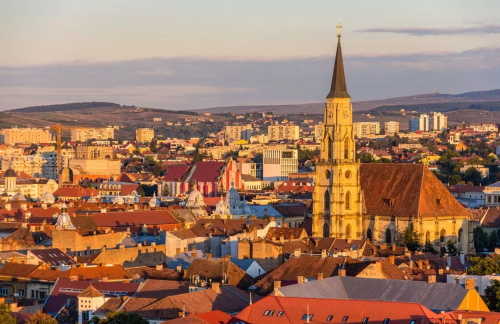
Situated in the heart of the Transylvanian plateau, Cluj-Napoca is the cultural and educational hub of the region. With a long-standing tradition of higher education, it is one of Romania’s main university cities. Compared to Brașov and Sibiu, Cluj-Napoca feels more modern, yet history is present at every corner. Many travelers choose it as a base to explore the Carpathians or venture to nearby towns and villages.
Brașov: A Historic City Surrounded by Mountains
Brașov is arguably Transylvania’s most iconic medieval city. Its old town is remarkably well-preserved, featuring cobblestone streets, colorful houses, and quiet squares that transport visitors back several centuries.
- Black Church (Biserica Neagră)
The city’s landmark, built in the 14th century, is the largest Gothic church in Southeastern Europe. Named “Black Church” after being blackened by a fire, its interior houses 119 carpets from Anatolia (modern-day Turkey) and a massive 19th-century pipe organ. Entry requires a ticket (25 RON per person), and during holidays, concerts are often held inside.
- White Tower and Black Tower
These medieval fortification towers now serve as viewpoints. From the top, visitors can admire Brașov’s red-tiled rooftops spread across the city, framed by the surrounding mountains—a must-visit for photographers.
- Council Square (Piața Sfatului)
Serving as Brașov’s civic center since the 13th century, the square is now lined with cafes and art shops. At its center stands the “Trumpeter’s Tower,” still a silent witness to the city’s rich history.
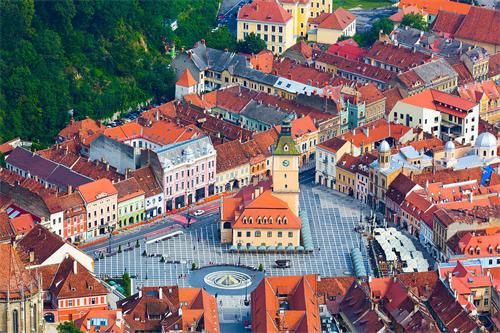
Another defining feature of Brașov is the massive “BRASOV” sign perched on Mount Tampa, reminiscent of the Hollywood Hills sign, making it a popular spot for travelers to snap photos.
Sibiu: The “City of a Thousand Eyes”
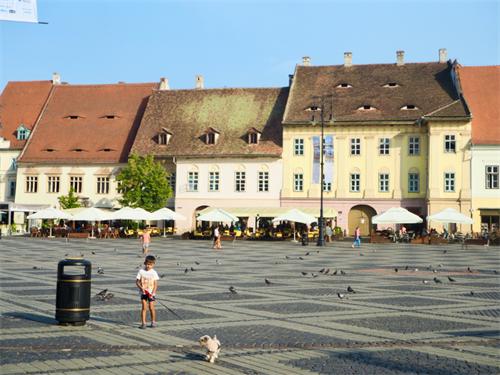
Sibiu, often called the “jewel of Romania,” was founded at the end of the 12th century by German settlers, and its German name is Hermannstadt. The city earned the nickname “City of a Thousand Eyes” due to the unique windows on its roofs that resemble watchful eyes.
- Bridge of Lies (Podul Minciunilor)
Built in 1859 as Romania’s first iron bridge, legend says that if anyone tells a lie while standing on the bridge, it will shake—or even collapse. Today, it is a romantic and popular photo spot for couples and tourists alike.
- Sibiu Great Square (Piața Mare)
Since 1366, this square has witnessed the city’s triumphs and trials and remains the focal point for both locals and visitors. The surrounding rooftops’ eye-shaped windows are a distinctive architectural feature.
- Holy Trinity Roman Catholic Church
Built in 1726, it is one of Transylvania’s most notable Baroque churches. Its exterior is austere and solemn, while the interior dazzles with gilded artistry, offering a perfect combination of religion and visual art.
Legends and Reality: Bran Castle
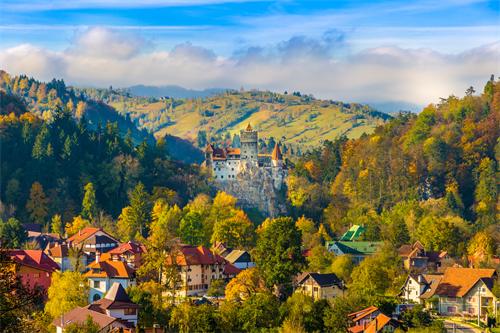
No other site in Transylvania merges history and legend as seamlessly as Bran Castle.
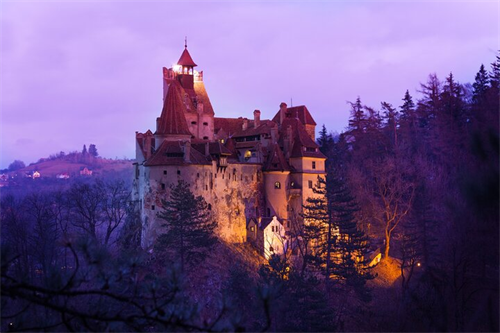
Constructed in 1377, this hilltop fortress is located approximately 30 kilometers south of Brașov. As a defensive stronghold, its interior is relatively modest, but the narrow corridors and stone walls create a perfectly eerie ambiance that aligns with vampire lore.
In the 15th century, Wallachian ruler Vlad III, known as “Vlad the Impaler,” gained notoriety for his brutal methods, which were later exaggerated into the myth of a bloodthirsty vampire. Bram Stoker, an Irish author, drew inspiration from Vlad’s legend when writing Dracula in the late 19th century, cementing Bran Castle’s association with the mysterious Count Dracula.
- Ticket: 60 RON per person
- Opening Hours: 09:00 – 19:00 (Closed on Mondays)
- Transportation: Accessible by rental car from Bucharest or a roughly 2-hour drive from Brașov.
Today, Bran Castle functions as a museum and attracts countless tourists eager to experience the legend firsthand, often equipped with garlic and curiosity.
Traditional Villages and Local Life
Scattered throughout the mountains of Transylvania are hundreds of villages where the pace of life differs markedly from modern urban centers. While some residents use contemporary tools, many still follow traditional farming and handcrafted practices, believing them to be the purest way of life. For travelers, these villages offer a glimpse of a simpler time—a chance to experience a lifestyle seemingly frozen in the past.
Hiking and Road Trips
Via Transilvanica: The Trail Across Transylvania
This 1,400-kilometer hiking route stretches from the Ukrainian border to near Serbia. Hikers typically cover 15–25 kilometers daily, with clearly marked trails and village inns along the way. Accommodation costs approximately 120–150 RON per night, with meals priced separately.
Carpathian Mountain Trails
- Bucegi Mountains: Known for bizarre rock formations and mystical highland landscapes.
- Făgăraș Mountains: The highest mountain range in Romania, with Moldoveanu Peak reaching 2,544 meters. Ascending to the summit takes 6–9 hours, offering spectacular views.
- Winter Routes: Trails such as the Albota–Apuseni ridge leading to the “Dragon’s Window” are ideal for experienced hikers seeking dramatic snow-covered scenery.
Transfăgărășan Highway
Considered one of the world’s most beautiful roads, this 90-kilometer highway crosses the Făgăraș Mountains, connecting Transylvania with Wallachia. Twisting curves and deep valleys make it a haven for driving enthusiasts and photographers alike.
Authentic Culinary Experiences
Transylvanian cuisine blends the robust flavors of Eastern Europe with Mediterranean delicacy:
- Sarmale: Cabbage or vine leaves wrapped around a mixture of meat and rice, then steamed.
- Farmhouse Sausages and Roast Suckling Pig: Richly flavored, representing a staple of Romanian dining.
- Sheep Cheese and Yogurt: Creamy and thick, often paired with bread.
- Schotten Pastries: Soft and sweet, ideal for an afternoon snack.
- Wines and Fruit Wines: Particularly Muscat wine, a must-try specialty.
Sipping a coffee or sampling local wine at a square in Brașov or Sibiu while admiring centuries-old architecture is one of the most delightful experiences for travelers.
Practical Tips
- Accommodation: Opt for traditional guesthouses or boutique hotels to immerse yourself in local culture.
- Transport: Bucharest, Brașov, and Sibiu all have airports. Alternatively, trains from Hungary can bring you into Transylvania. Renting a car is the most flexible way to explore.
- Festivals: If your visit coincides with local celebrations, join in traditional dances and ceremonies to experience authentic folklore.
- Gear: Mountain weather is unpredictable; bring suitable hiking shoes and warm clothing.
- Visa: Romania is not part of the Schengen Area; a separate visa is required.
A Journey Through History and Legend
Transylvania is far more than a land dominated by vampire myths. It is a gift of nature, a repository of medieval heritage, a realm of serene village life, and a place where travelers’ spirits can embark on an adventure. Whether your journey is inspired by the footsteps of Dracula or a love of mountains and ancient towns, Transylvania offers an unforgettable experience.
Walking along cobblestone streets, reaching the summit of Făgăraș Peak, or pausing amid the stone walls of Bran Castle, one comes to realize that the true charm of Transylvania is not the legends themselves, but the vibrant life that continues to thrive here. This is a land where history, myth, and nature converge to create an enduring enchantment that touches all who visit.
Recommended for you: