


Why the Marquesas Islands Captivated Paul Gauguin: A Travel Guide
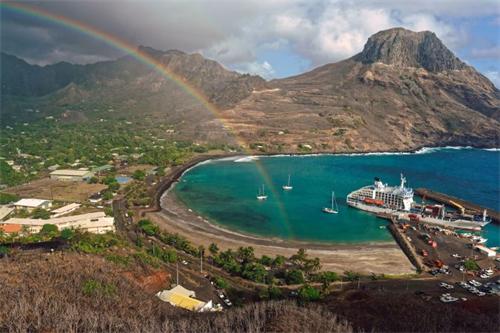
Amid the vast turquoise expanse of the South Pacific lies a string of little-known islands—the Marquesas Islands. They lack the glamour of Tahiti and the resort-style luxury of Bora Bora, yet their raw, rugged, and mysterious beauty captivated French painter Paul Gauguin and singer Jacques Brel, who chose to spend their final years here.
On July 26, 2024, UNESCO officially inscribed the Marquesas Islands on the World Heritage List. In its statement, UNESCO praised the islands for their unique natural landscapes and cultural traditions, representing universal values of humanity. To set foot on these islands is to enter a world that belongs both to the distant past and to the vibrant present.
I. A Land Shaped by Fire
In the local language, the Marquesas are called Te Henua Enata—“the Land of Men.” Situated at the northernmost edge of French Polynesia, the islands cover nearly 1,000 square kilometers, yet remain semi-isolated from the outside world.
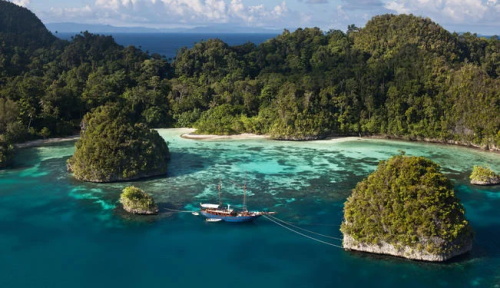
Unlike the ring-shaped atolls typical of many tropical islands, the Marquesas are volcanic high islands. They have little coral reef protection; instead, steep peaks rise dramatically from the ocean, and the coastline looks like a massive stone wall carved by time, broken only by a few small beaches. Dense forests, deep valleys, and thundering waterfalls dominate the landscape. From above, the islands resemble giants rising straight out of the sea.
Seafaring people first arrived here around 1000 CE, bringing Polynesian culture and beliefs. On these remote islands, they created a remarkable civilization: megalithic stone structures, tiki statues, intricate wood carvings, dance, and tattoo traditions—all reflecting reverence for ancestors and nature.
Today, the Marquesas still pulse with that vitality. Beyond the archaeological sites and living arts, the islands are home to rare plants and animals: they host the richest seabird colonies in the South Pacific, and their waters, almost untouched by human activity, remain one of the planet’s true marine wildernesses.
II. An Artist’s Utopia: Gauguin and Brel
If nature is the body of the Marquesas, then art and spirituality are its soul.
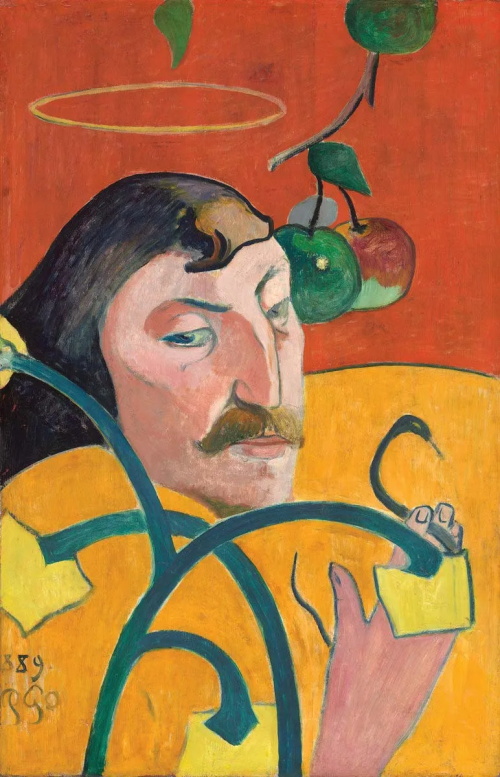
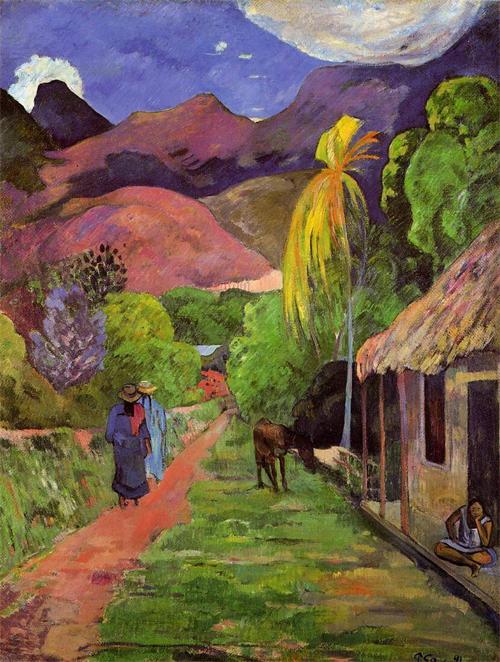
In 1891, Gauguin left the bustle of Paris and sailed to Tahiti. “I left to find peace, to escape the shadow of civilization,” he said. There, he created masterpieces such as Tahitian Women on the Beach. Yet conflicts with the colonial government and the Church eventually pushed him to seek a place even more untamed. In 1901, he moved to Hiva Oa.
There he built a wooden house called Maison du Jouir (“House of Pleasure”), continuing to paint despite failing health and financial hardship. He remained on the island until his death in 1903. Gauguin was buried in the Calvaire Cemetery in Atuona, his grave overlooking the Pacific Ocean. Later, the French singer Jacques Brel was also buried nearby. Their presence lends the island an enduring aura of legend.
III. Island Highlights: From Nuku Hiva to Ua Pou
1. Nuku Hiva: The Heart of the Marquesas
The largest island of the group, Nuku Hiva, is often called a “modern Jurassic Park.” Covering 339 square kilometers, it is a dramatic mix of valleys and cliffs.
- Taioha’e: The island’s main town, nestled along a bay, calm yet lively.
- Vaipo Waterfall: At 350 meters, one of the tallest waterfalls in the world, cascading like a curtain of sky.
- Archaeological sites: Stone carvings and petroglyphs at Koueva, the tiki statues of Vai Tavi’i in Taipivai—all echoing the ancient civilization.
- Anaho and Hatihe’u Bays: Lush green valleys meet deep-blue waters, forming idyllic sanctuaries.
Exploration here can be done by 4x4, horseback, or hiking—off-road thrills meet raw tropical beauty.
2. Hiva Oa: Gauguin’s Final Home
Hiva Oa is the most famous of the Marquesas, a land of gorges, cliffs, and serene bays.
- I’ipona site in Puama’u: Home to Taka’i’i, the largest tiki statue in French Polynesia, imposing and solemn.
- Ta’a’oa Cultural Complex: A 12-hectare archaeological site hidden in lush vegetation.
- Mount Temetiu: The highest peak on the island, shrouded in clouds, a paradise for hikers.
- Atuona: Gauguin’s and Brel’s resting place, and a pilgrimage site for travelers.
Walking through Atuona, you’ll hear children laughing and see artisans carving wooden crafts. Time flows slowly here, echoing Gauguin’s quest for the “primitive and eternal.”
3. Ua Pou: The Volcanic Spears
Ua Pou is famous for its striking volcanic spires—four massive basalt pillars that pierce the sky, guarding the island.
- Mount Oave: At 1,230 meters, the highest peak of the Marquesas.
- Hakahetau Bay: Known as “the bay where we rest,” a safe haven for sailors.
- Arts and crafts: The islanders are skilled stone and redwood (*miro*) carvers, their creations imbued with spiritual force.
While Nuku Hiva impresses with grandeur and Hiva Oa with history, Ua Pou exudes fiery boldness—a different face of the Marquesas.
IV. Tahiti: Gateway and Contrast
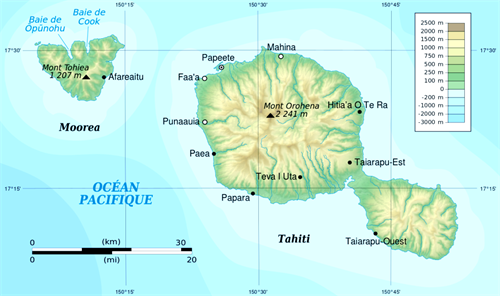
Most travelers reach the Marquesas via Tahiti, the political and economic center of French Polynesia, and the best-known South Pacific island.
- Papeete Market: A bustling bazaar selling fruit, handicrafts, and souvenirs.
- Robert Wan Pearl Museum: One of the world’s largest pearl museums, showcasing Polynesia’s pearl heritage.
- Activities: Legendary surfing at Teahupoo, whale watching, diving, and hikes through volcanic valleys.
- Cuisine: Poisson cru - (raw fish with coconut milk), porc rôti (roast pork), and pain coco (coconut bread) are must-try flavors.
Tahiti’s lively, colorful rhythm contrasts sharply with the Marquesas’ isolation and stillness. Gauguin found inspiration in Tahiti, but in the Marquesas he wrote the final chapter of his life.
V. Practical Travel Information
- Getting there:
- By air: Flights from Faa’a International Airport (Tahiti) to Nuku Hiva or Hiva Oa take about 3.5–4 hours.
- By sea: The Aranui cruise ship combines supply runs with tourism, departing from Tahiti on 10–14 day voyages.
- Best time to visit:
The dry season, May to October, offers sunny skies and little rainfall. From July to September, visitors may also witness whale and dolphin migrations.
VI. A Personal Moment: Stepping into Gauguin’s Dream
Climbing the slopes of Hiva Oa, the breeze rustling through palms, I looked down on a turquoise bay. In the distance, Atuona’s cemetery gleamed white in the sunlight. Gauguin’s grave was simple, modest. Standing there, I heard waves and birdsong intertwining—time itself seemed to pause.
In that moment, I understood why Gauguin came here. It was not escape, but pursuit. He sought not just colors and lines, but a serenity and honesty that felt eternal.
VII. Conclusion
The Marquesas Islands are a primeval paradise far from the modern world. Their volcanic landscapes, ancient heritage, and artistic legacy form a unique tapestry.
Here, Gauguin painted the last strokes of his life, while travelers today find deep communion with both nature and self.
If you are seeking more than a journey—if you long for a pilgrimage of the soul—then turn your eyes to this “Land of Men.”
Recommended for you: