


Bhuj and the Great Rann of Kutch: Art, Handicrafts, and Desert Camping
If Rajasthan symbolizes the brilliance of colors and palaces, then Gujarat’s Kutch region is a symphony of desolation and art. Here, you will find desert-like salt marsh wonders, as well as embroidery, weaving, and woodcarving that have been passed down for generations. You can trace the ancient remains of the Indus Valley Civilization, or sit beneath the stars by a bonfire, experiencing the dances and songs of the Kutch people.
Bhuj is the gateway city for exploring the Kutch region. It is not only a transport hub but also a gathering place of art and history. From here, you can step into 18th-century palaces, wander through folk museums, or drive a few hours to the world-famous Great Rann of Kutch and spend an unforgettable night desert camping under the stars.
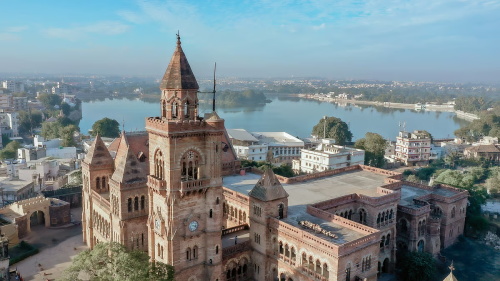
First Stop: Bhuj — A City of History and Craft
Bhuj is a small yet surprising city. The devastating earthquake of 2001 once left it in ruins, but today Bhuj has been reborn, shining with unique art and architecture.
Aina Mahal (Palace of Mirrors)
Built in the 18th century, Aina Mahal was commissioned by Kutch ruler Rao Lakhpatji and designed by the craftsman Ram Singh Malam. Having studied in Europe for 17 years, Malam introduced Western techniques of glass, mirror, and tile work to India, blending them with local woodcarving and stonework to create a palace of unique style.
Inside Aina Mahal, you’ll be surrounded by mirrored walls and carved wooden furniture, as though you’ve entered a “shimmering palace.” Intricate floral designs and light reflections give the space a sense of elegance and mystery. A visit takes around 1.5 hours, with tickets costing only ₹20 — a true bargain.
Prag Mahal
Adjacent to Aina Mahal, Prag Mahal presents a stark contrast. Designed by a British architect, it features Rajasthani red sandstone and Italian marble, in an unmistakably European Gothic style. Its 45-foot clock tower — the second highest in India — offers sweeping views of Bhuj from the top.
Though damaged in the 2001 earthquake, the palace still retains lavish halls, intricate windows, and royal relics. If Aina Mahal is delicate, Prag Mahal is grand.
Bhujiyo Hill Fort
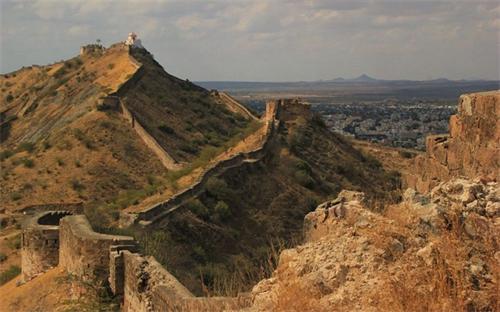
For a panoramic view of Bhuj, head to Bhujiyo Hill Fort. This 18th-century fortress once served as a military outpost. Today, it is an excellent vantage point over the city and the surrounding desert.
Kutch Museum
Founded in 1877, Kutch Museum is the oldest museum in Gujarat and a key to understanding local culture. The embroidered garments on display are not only art pieces but also a narrative of women’s lives — from marriage to identity, all recorded with needle and thread. Among the treasures is the stunning “Airavat,” a white wooden elephant with seven carved tusks.
Bhujodi Craft Village
Just 8 km from Bhuj lies Bhujodi, a haven of handicrafts. Generations of families here have lived by weaving wool and cotton into shawls, sarees, and carpets. Visitors can not only shop but also watch artisans at work, and even try weaving themselves. It’s less about shopping and more about cultural immersion.
Smritivan Earthquake Memorial Museum
Another must-visit in Bhuj is Smritivan, built atop Bhujiyo Hill in memory of the victims of the 2001 earthquake. The museum not only recounts the quake’s history but also celebrates Kutch’s crafts and nature through innovative architecture. Its rooftop changes vegetation with the seasons, symbolizing the passage of time. Visiting is not just sightseeing — it’s a meditation on the relationship between humans and nature.
Second Stop: The Great Rann of Kutch — A White Wilderness
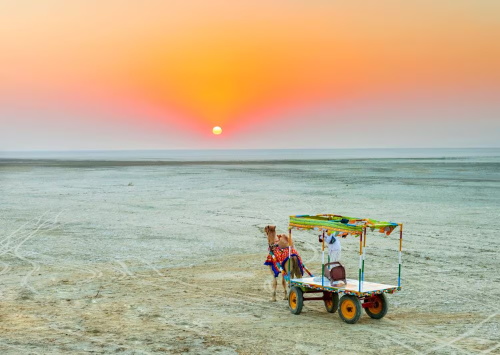
About 1.5–2 hours’ drive from Bhuj lies the Rann of Kutch, a salt marsh spanning over 7,500 square kilometers, making it one of the largest in the world.
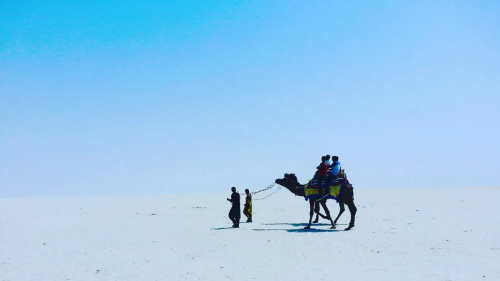
Salt Wonders and Festivals
After the monsoon, the marsh gradually dries. By November, vast salt crystals cover the land, creating a boundless white world. The best time to visit is from November to February, when the weather is cool and migratory birds arrive.
This period also coincides with the Rann Utsav, the White Desert Festival. In Dhordo village, a temporary tent city is set up with hundreds of luxury tents. Cultural performances, dance, drum music, handicraft stalls, and food markets bring the desert alive. At night, bonfires crackle while stars and salt plains reflect each other, creating a dreamlike atmosphere.
Kala Dungar (Black Hill) and Border Views
For a different perspective of the Rann, visit Kala Dungar, the highest point in Kutch at 458 meters. From the summit, you can see roads leading toward the Pakistan border. Along the way, villages practice unique woodblock printing, a craft influenced by centuries of cross-border exchange.
Do note that this is a sensitive border area, and entry into the Rann requires a permit. You can obtain one at the police station in Bhuj or at the checkpoint in Bhirandiyara village.
Third Stop: Kutch Desert Wildlife Sanctuary
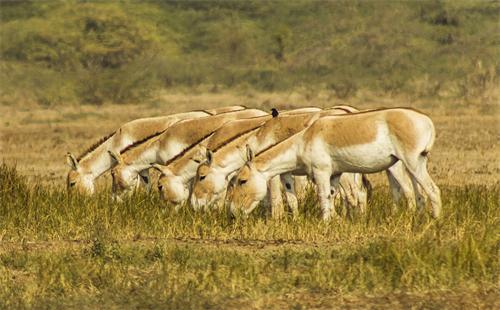
The Rann is not just a barren white expanse — it’s also a refuge for life. Covering about 7,505 square kilometers, the Kutch Desert Wildlife Sanctuary is one of India’s largest protected areas. It is home to over 2,000 Indian wild asses, as well as nilgai, blackbuck, wolves, and jackals.
The biggest spectacle arrives in winter, when flocks of flamingos gather by the thousands. Their pink silhouettes over the salt wetlands are breathtaking. The best viewing season is November to February.
Fourth Stop: Desert Camping
To truly immerse yourself in the Kutch landscape, you must experience camping in Dhordo.
At night, tents rise on the salt flats, bonfires burn, and the beats of Kutch drums and songs fill the air while dancers whirl in the firelight. A traditional all-vegetarian Gujarati thali offers a rich culinary experience. At dawn, ride a camel to witness the sunrise, as the salt desert shifts from white to pink to golden.
Such moments etch the essence of Kutch deep into memory.
Fifth Stop: Side Trips
Mandvi Beach and Vijay Vilas Palace
If you crave the sea, head 60 km south of Bhuj to Mandvi. Its serene beach and the picturesque Vijay Vilas Palace await. The palace has been a backdrop for Bollywood films, and at sunset, the golden sands make it especially enchanting.
Dholavira Archaeological Site
For archaeology and history enthusiasts, a day trip to Dholavira is worthwhile. About 220 km from Bhuj, it is a major Harappan site of the Indus Valley Civilization. Fortified remains, ceremonial grounds, and an ancient water reservoir showcase Bronze Age ingenuity. In 2021, Dholavira was inscribed as a UNESCO World Heritage Site.
Travel Essentials
- Best time to visit: October to March (cool and dry), especially November–February for Rann Utsav.
- Transport:
- Air: Bhuj has a small airport with 1-hour flights from Ahmedabad.
- Rail: Direct trains connect Bhuj with Mumbai, Ahmedabad, and other cities.
- Local: Auto-rickshaws within Bhuj; for the Rann, craft villages, and sanctuary, hire a car or self-drive.
- Permits: Required for entering the Rann of Kutch, obtainable in Bhuj or Bhirandiyara.
- Accommodation: Bhuj offers hotels and guesthouses; during Rann Utsav, Dhordo’s tent city is highly recommended.
Between Salt and Art
Traveling through Bhuj and Kutch is like stepping into a vast canvas where history and nature intertwine. The salt desert shifts colors between sunrise and sunset; flamingos and wild asses leave their marks on the vast land; and in the craft villages, the sound of needles and looms keeps tradition alive in the modern world.
Recommended for you: