


Exotic Birds Up Close: Papua New Guinea and Ecuador Birdwatching Tips
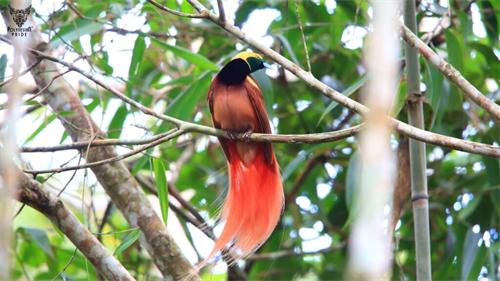
Birdwatching, which originated as a leisurely pastime in late 18th-century Britain and Northern Europe, was initially an exclusive hobby enjoyed only by a small circle of wealthy and idle aristocrats. Over time, however, it has evolved into a popular outdoor activity embraced by nature enthusiasts worldwide. Simon Barnes, a British naturalist, speculated in his work “A Bird in the Window” that when early humans first turned their eyes to the sky, they may have instinctively started observing the flight of birds. He believed that everyone has, at some point, dreamt of flying—free, graceful, and magical—and that birds, with their effortless soaring, awaken an innate sense of wonder and curiosity within the human soul.
In today’s urbanized world, concrete jungles increasingly replace natural landscapes, prompting people to realize the importance of preserving wilderness and wildlife. Within this context, birdwatching has grown beyond mere recreation—it serves as a bridge between humans and nature while fostering a large and dedicated community of bird enthusiasts. Embarking on a birdwatching journey not only allows one to witness the beauty of rare and exotic birds but also becomes an adventure for the soul, an intimate encounter with the wild.
Papua New Guinea: Paradise of the Birds of Paradise
Papua New Guinea, a tropical haven located on the island of New Guinea, is a dream destination for birdwatchers worldwide. The island is home to remarkably few small predators such as wild cats or civets, and lacks food-competitive mammals like monkeys and squirrels. This absence of natural threats allows bird species to thrive freely. With approximately 600 unique bird species, the region is particularly famous for the Birds of Paradise, whose beauty is nothing short of breathtaking.
In Papua New Guinea, evolutionary pressures on birds have less to do with survival and more with attracting mates—explaining the Birds of Paradise’s extravagant plumage and elaborate courtship dances. Although these birds appear flamboyant, taxonomically, they are close relatives of the seemingly ordinary crow. Worldwide, there are 42 species of Birds of Paradise, scattered across New Guinea, surrounding islands, and parts of northern Australia. Spotting all species in the wild in a single trip is nearly impossible, so most birdwatchers are delighted to observe just a few representative species.
Birds of Paradise Watching Tips
- Fixed Courtship Grounds: Many Birds of Paradise have specific, relatively fixed sites for their courtship displays, ranging from high tree branches to small clearings in the forest. Learning about these locations in advance allows birdwatchers to wait patiently and witness these spectacular performances.
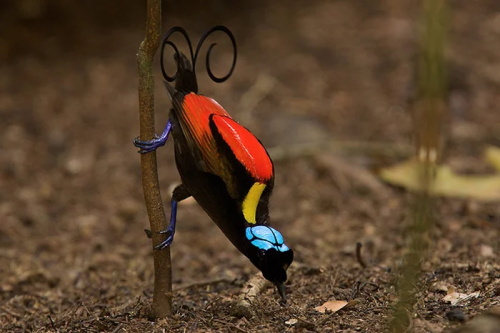
- Wilson’s Bird of Paradise (Cicinnurus regius): Known as the “Flame Bird,” the male positions itself with its back to the female, head down and tail feathers raised, displaying bright orange breeding plumage while performing a rhythmic courtship dance. Widely distributed and bold, this species is one of the easiest Birds of Paradise to observe in New Guinea.
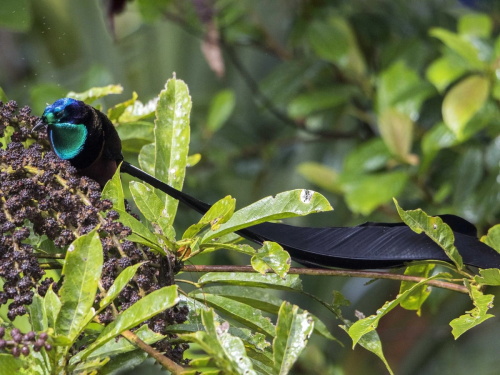
- Princess Stephanie’s Long-tailed Bird of Paradise (Cicinnurus regius): Characterized by its striking black elongated tail, it moves nimbly through the canopy. Photographers need patience to capture clear shots of its agile movements.
- Saxony’s Bird of Paradise (Cicinnurus regius): Its head sports elongated crest feathers that shake vigorously during courtship, producing a visually striking spectacle.
- Brown and Black Sicklebills: Large in size and possessing booming calls, especially the Black Sicklebill, which is rare and highly sought after by birdwatchers.
The most captivating feature of Birds of Paradise is their structural coloration. Their feathers contain microscopic scales that reflect and refract light, producing metallic shades of blue, green, purple, and other colors. Even in the 19th century, European aristocrats were dazzled by the feathers’ brilliance, demonstrating the extraordinary nature of this plumage.
During courtship, male Birds of Paradise not only dance but also meticulously arrange their “stage,” clearing the forest floor, positioning branches, and even decorating with blue berries or beetle wings to create unique performance spaces. The world of these birds is thus not only a visual feast but also a display of behavioral artistry.
Conservation and Sustainable Watching
Despite their breathtaking beauty, the rainforests of New Guinea are disappearing at an alarming rate of about 2% per year, with palm oil plantations and gold mining threatening their habitats. Of the 42 Bird of Paradise species, 30 are classified as “Near Threatened” or “Endangered.” For instance, the Ribbon-tailed Bird of Paradise has fewer than 5,000 individuals in the wild, and the Blue Bird of Paradise exists only in scattered forest patches. Captive breeding is extremely challenging, with low survival rates, underscoring their reliance on natural environments.
Currently, Papua New Guinea has established 12 Bird of Paradise conservation areas. Local communities participate in patrols to prevent poaching and earn income from eco-tourism. Studies show that the population of Wilson’s Bird of Paradise, for example, increased by around 30% within just ten years. Birdwatchers should always remember that the true beauty of these birds belongs to the rainforest, not to display cases or crowns. With continued protection, these “heavenly dancers” may continue to perform their elegant dances amidst the cloud-covered forests.
Ecuador: Paradise of Hummingbirds
In contrast to Papua New Guinea, South America, with its diverse geography and unique ecosystems, is one of the world’s richest regions for bird diversity. Ecuador is particularly remarkable, hosting approximately 1,600 native bird species—about 15% of the world’s total. The Galápagos Islands alone are home to 38 endemic species. Hummingbirds (Trochilidae), small, agile, and vibrantly colored, are exclusive to the Americas and cannot be found on other continents.
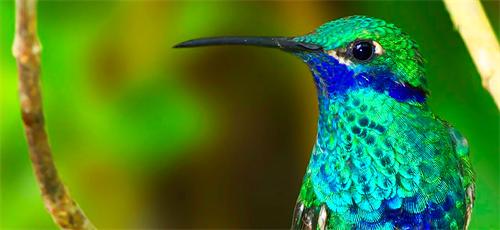
Hummingbirds are tiny, with feathers that shimmer like fish scales, displaying rainbow or metallic hues, especially in males. Their long, slender bills and extendable tongues allow them to feed on nectar, supplemented by small arthropods for protein. Their narrow wings beat up to 50 times per second, enabling unique flight abilities, including hovering, flying backwards, and vertical ascents and descents.
Top Birdwatching Spots in Ecuador
1. Carolina Park:
Located in central Quito, this urban oasis hosts 4-5 species of wild hummingbirds, particularly around red-flowered trees on the western side. Early morning before 8 a.m. or late afternoon after 5 p.m. are ideal times. Hummingbirds are wary, so long lenses and patience are essential for photography.
2. Sachatamia Forest Lodge:
About 1.5-2 hours from Quito, this mountain lodge is freely accessible and offers lodging and meals. The lodge attracts roughly 20 hummingbirds using sugar-water feeders. Early mornings provide the best opportunity for observation, and visitors may also encounter toucans.
3. San Isidro Lodge:
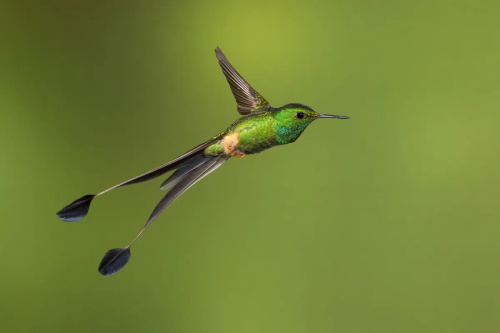
Located southeast of Quito, approximately 2 hours by car, visits require prior reservation. Hummingbirds are visible throughout the day and are relatively fearless, offering close-up encounters and unique tactile experiences.
4. Mindo Cloud Forest:
At around 2,000 meters elevation, the 19,200-hectare rainforest hosts over 550 bird species, including more than 40 hummingbird species. Many lodges have observation points and provide sugar-water feeding stations, allowing visitors to attract hummingbirds to their hands.
5. Antisana Ecological Reserve in the Andes:
About one hour southeast of Quito, at elevations between 2,800 and 3,700 meters, this reserve is home to high-altitude hummingbirds like the Andean Hillstar, Chimborazo Hillstar, and Peruvian Hillstar. These birds endure harsh conditions, with hearts weighing up to 10% of their body mass and heart rates exceeding 1,000 beats per minute.
Hummingbird Watching Tips
-Equipment: Long lenses capture flight trajectories, while tripods and remote triggers improve shot stability.
-Habitat Selection: Hummingbirds frequent flowers and tree branches; observing activity patterns beforehand helps set up optimal shooting locations.
-Timing: Early morning light is soft, and bird activity is frequent. Midday sees reduced activity and more dispersed behavior.
The Unique Appeal of Birdwatching
Birdwatching is more than an outdoor hobby—it is a pursuit of the spirit. It offers a chance to touch the mysteries of nature and stimulates inspiration for life. Whether waiting for the dazzling dance of Birds of Paradise in New Guinea’s rainforest or capturing the fleeting movements of hummingbirds in the high Andes, birdwatching immerses one in intimate contact with the natural world.
Moreover, birdwatching generates economic benefits for local communities. Eco-tourism provides funding for bird conservation and allows tourists to experience sustainable travel practices. By learning about bird behavior and observing their habits, visitors gain a deeper understanding of the complexity and beauty of the natural world.
Practical Advice and Insights
1. Patience is Key: Rare birds are often shy or inhabit specific environments. Observers must remain quiet and wait patiently.
2. Environmental Awareness: Respect the birds’ habitats. Avoid disturbing or capturing them, and support conservation areas through eco-friendly tourism.
3. Proper Gear: Long lenses, tripods, remote shutters, and binoculars are essential, particularly for photographing Birds of Paradise and hummingbirds.
4. Timing Matters: Early morning and late afternoon are usually the most active periods for birds.
5. Research Habitats in Advance: Understanding target species’ habits and courtship behaviors increases chances of successful observation and photography.
Birdwatching is a journey of the heart and a tribute to nature. It reminds us that true beauty belongs to wild, free lives, not to captured specimens or display cases. Whether following the fiery dance of the Wilson’s Bird of Paradise or photographing a high-altitude hummingbird in mid-flight, each birdwatching adventure leaves travelers with unforgettable moments of wonder and insight. On this journey, you are not merely an observer—you are a witness to the miracles of nature.
Recommended for you: