


Canada’s Arctic Wildlife: How to Safely Photograph Polar Bears in Churchill
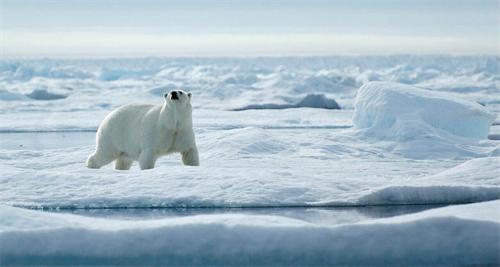
When you think of polar bears, you probably picture them pacing slowly across the sea ice or resting quietly beneath shimmering auroras, like true guardians of the Arctic. And indeed, there is one place in Canada where such visions come alive. A remote town lies directly along their migration path, and every autumn, massive white figures appear against the tundra horizon. That place is Churchill, in northern Manitoba—famous worldwide as the Polar Bear Capital of the World.
In Churchill, the relationship between humans and polar bears is delicate. Visitors must keep a safe distance while also trying to get as close as regulations allow, in hopes of photographing these animals in their most natural state. For photographers and adventurers, the question is clear: How do you capture breathtaking images of polar bears while ensuring safety and protecting the fragile environment?
Churchill: A Town at the Edge of the World
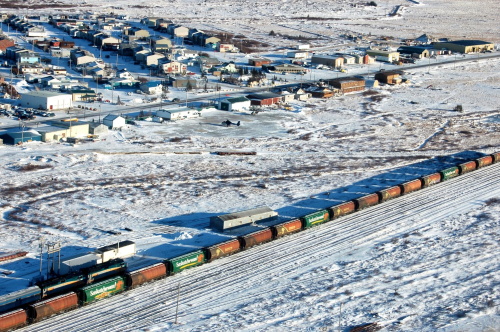
Churchill sits at latitude 58°N, roughly 1,000 kilometers south of the Arctic Circle. Strictly speaking, it isn’t inside the Arctic Circle itself, but its location on Hudson Bay makes it one of the most important stopovers for migrating polar bears. It is also one of the northernmost towns in Canada. There are no roads that reach it, making it feel truly isolated; only the railway and small planes connect it to the outside world. Churchill has a rich history. It once served as a strategic post contested by English and French colonial powers and later became an important port for Hudson Bay trade. Today, however, it thrives mainly on its wildlife fame. The polar bear and the beluga whale have transformed this remote settlement into a magnet for adventurers, nature lovers, and photographers from all over the globe.
Getting There
- By Train: From Winnipeg, the Hudson Bay Railway travels north for 1,697 kilometers, taking about 34 hours. Known as “the loneliest train in Canada,” this route winds through forests, lakes, and endless tundra, offering travelers some of the most dramatic landscapes in the country. It’s a slow journey, but also a classic way to arrive in Churchill.
- By Air: For those with limited time, flights from Winnipeg to Churchill take just about two hours. While less romantic than the train, it is the most practical option for short trips.
Polar Bear Season: When Bears Outnumber Humans
There are about 25,000 polar bears in the world, and more than half of them live in Canada. Each year from October to November, as the summer habitat begins to freeze, polar bears gather along the shores of Hudson Bay. They are waiting for the sea ice to form, so they can resume their hunt for seals—their main source of food.
During this time, something astonishing happens near Churchill: there are more bears than people. Polar bears wander across the ice and tundra, sometimes approaching the outskirts of town. For wildlife photographers, this is paradise—the rare chance to witness and capture the bears in action, against some of the most striking northern landscapes on earth.
If you are determined to photograph polar bears at their most animated and dynamic, this is the season you cannot miss.
How to See Polar Bears in Churchill
Churchill offers multiple ways to encounter polar bears, each with its own advantages and limitations. Your choice depends on budget, available time, and the type of experience you seek.
1. By Train – A Slow and Distant Glimpse
Churchill operates special railway cars for wildlife viewing. These cars are fitted with wide windows that allow passengers to enjoy the passing landscape and spot polar bears, arctic foxes, snowy owls, and other creatures. However, because the train follows fixed routes, encounters are usually at a distance. This is ideal for travelers who prefer a slower pace and want to enjoy the scenery as much as the animals.
2. Tundra Buggy – The Classic Bear-Watching Vehicle
The Tundra Buggy is the iconic way to see polar bears in Churchill. These massive, custom-built vehicles are about 14 meters long and nearly 5 meters high, with enormous wheels designed to handle snow, mud, and frozen ground. Their elevated design keeps tourists safe from curious bears and prevents damage to the fragile tundra.
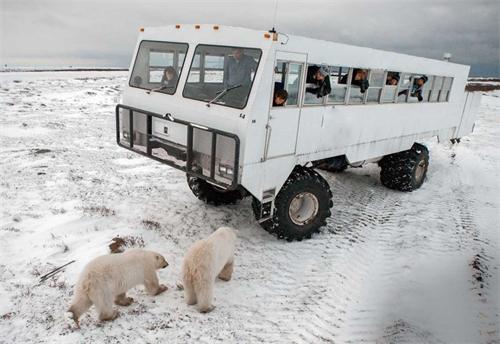
From inside the buggy, you can shoot through large windows or step out onto the open back platform. Polar bears often approach, sniff around, and even stand up to peer inside, creating unforgettable close encounters and remarkable photographic opportunities.
> Tip: Tundra Buggies only operate during the two main wildlife seasons—summer for beluga whales (July–August) and autumn for polar bears (October–November). Each buggy is equipped with heating and serves simple meals like soup, sandwiches, and hot coffee, making the cold more bearable.
3. Tundra Buggy Lodge – Living Among the Bears
If a day trip isn’t enough, you can stay at the one-of-a-kind Tundra Buggy Lodge. This mobile train of connected vehicles includes sleeping cabins, a dining car, a lounge, and outdoor viewing decks. Guests literally live out on the tundra, surrounded by bears day and night.
At night, you can lie in bed watching the aurora borealis dance above, while during the day, bears roam just outside. Conditions are basic—bunk beds, curtains instead of doors, and shared bathrooms—but the immersive experience is unmatched. Only about 200 beds are available each year, making it one of the most exclusive wildlife experiences on the planet.
4. Helicopter Tours – A Bird’s-Eye View
For those who want to capture the big picture, helicopter tours of 60 or 90 minutes offer sweeping views of the tundra, sea ice, and the bears’ migration routes. From above, you can photograph the intricate textures of the land and the vast expanses of wilderness. Though costly, the perspective is unparalleled.
5. Boat Trips – Meeting Bears on the Water
In September and early October, before the bay fully freezes, you can take a boat trip to see polar bears swimming. Watching such massive creatures glide effortlessly through the water is extraordinary. These cruises also often coincide with the beluga whale migration, when thousands of white whales fill the Hudson Bay and Churchill River—a spectacle as grand as any polar bear sighting.
Safety and Photography Tips
Polar bears might appear calm and even playful, but they are among the most dangerous predators on earth. Safety comes first, both for you and for the animals. Always follow the local rules.
Safety Guidelines
1. Never approach or feed bears. Feeding them changes their behavior and creates serious dangers for both animals and humans.
2. Stay inside designated vehicles or zones. Outside the buggies, lodges, or guided areas, walking on the tundra is strictly forbidden.
3. Follow the guide’s instructions. Tundra Buggy drivers are experienced guides who know polar bear behavior and emergency protocols.
Photography Advice
- Use a telephoto lens of 300mm or longer. This allows you to keep a safe distance while still capturing details like fur texture or eye expressions.
- Turn off your flash to avoid startling the bears.
- Bring extra batteries and weather protection for your equipment. Cold drains batteries quickly, and lenses can fog or freeze.
- Take advantage of the golden light at dawn and dusk, when bears appear most dramatic against glowing skies or northern lights.
Beyond the Polar Bears: Other Wonders of Churchill
Although polar bears are the stars, Churchill offers much more to explore:
- Beluga Whale Season (June–August): Thousands of belugas swim up the Churchill River. Visitors can kayak or boat among them, listening to their haunting underwater songs.
- Birdwatching (May–September): Snow geese, Canada geese, peregrine falcons, and many other species gather here, making it a birding paradise.
- Aurora Borealis: Churchill boasts about 300 nights of aurora visibility each year. Whether from a lodge on the tundra or just outside town, the night skies explode with green and purple light.
- Eskimo Museum (Itsanitaq Museum): Here you can admire Inuit carvings, artifacts, and taxidermy specimens of musk ox, wolves, and of course, polar bears—offering cultural depth to your trip.
- Polar Bear Passport Stamp: At the local post office, you can stamp your passport with a unique polar bear emblem—a delightful souvenir.
A Travel Diary: The Moment of Eye Contact
The first time I climbed aboard a Tundra Buggy, I felt both thrilled and anxious. The huge wheels rolled slowly over ice and snow, the crunching sound outside contrasting with the hushed silence inside the cabin. Suddenly, the guide whispered: “Two o’clock—look ahead.”
There it was: a polar bear, approaching with steady, powerful steps. Its fur rippled slightly in the wind, and its dark eyes locked onto ours. For a moment, the entire vehicle went silent. Then, as if curious, the bear placed its front paws against the wheel and stretched its head upward, peering right at us. My camera shutter clicked rapidly, in rhythm with my pounding heart.
That moment was pure magic: no cages, no performances, just a wild animal and human beings staring at each other across the thin boundary of steel and glass.
Protecting the Home of the Polar Bear
A trip to Churchill is more than just an adventure. It is also a lesson in the fragile balance between humans and nature. The survival of polar bears is closely tied to climate change. Melting ice shortens their hunting season and forces them to wander farther for food. Their habitat is shrinking year by year.
As travelers, our responsibility is to witness these creatures with respect, leaving no trace behind and supporting conservation efforts. Every careful step helps ensure that polar bears remain the symbol of the North for future generations.
When night falls and the aurora sweeps across the sky, you may hear the faint crunch of a bear’s footsteps on the tundra. In that moment, you understand that the beauty and solitude of this land exist precisely because of them. The Arctic feels whole only when its guardians are present.
Recommended for you: