


Isle of Pines, New Caledonia: Paradise Beaches and Turquoise Waters
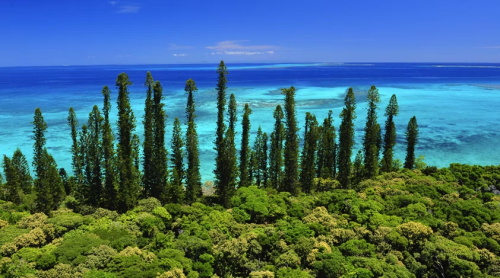
On July 12, 2025, French President Emmanuel Macron announced in Paris a “historic agreement” — New Caledonia would henceforth exist under the title of “The Nation of New Caledonia within the French Republic.” With this decision, the islands scattered across the South Pacific gained not only a renewed political identity but also an additional layer of uniqueness.
Located about 1,500 kilometers northeast of Australia, New Caledonia is home to around 280,000 inhabitants. The climate here is mild year-round, the rhythm of life unhurried, and the cultural atmosphere infused with both French elegance and Melanesian traditions. As one of the most exotic destinations in the South Pacific, New Caledonia lures travelers with its lagoons, coral reefs, and islands of breathtaking beauty. Among these islands, in addition to the main island of Grande Terre and the Loyalty Islands, there is one that has captured the imagination of travelers worldwide — the Isle of Pines (Île des Pins), often described as “the closest island to paradise.”
Nouméa: First Impressions of New Caledonia
Before setting out for the Isle of Pines, most visitors spend some time in Nouméa, the capital city. Often referred to as the “Little Paris of the South Pacific,” Nouméa sits on a peninsula surrounded by turquoise seas, dotted with small islands and sandy beaches.
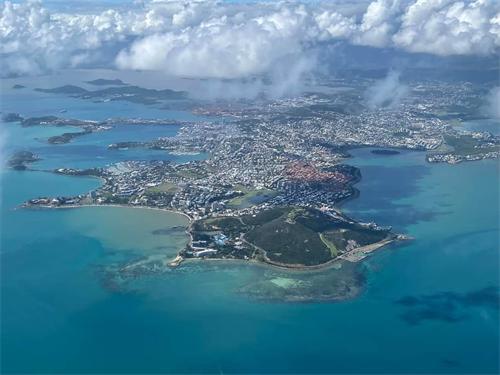
The cityscape is a mix of French colonial charm and tropical ease. You will notice French-style villas, bustling marinas lined with private yachts, and cafés serving croissants with local tropical fruit juice. It is a place where European sophistication meets Pacific relaxation, creating a unique cultural flavor.
One of the liveliest places in Nouméa is the public market, where you will find stalls overflowing with fresh seafood, tropical fruits like mangos, lychees, and pineapples, as well as handcrafted artisan goods. A note of etiquette for travelers: many vendors are proud of their original handmade products and may not allow photographs without permission. If you wish to take a snapshot, it’s best to politely ask first.
Nouméa is also the gateway to the Isle of Pines. From here, you can either take a domestic flight or a ferry ride to reach the island.
Isle of Pines: The Paradise Captain Cook Named
The Isle of Pines lies to the southeast of Grande Terre. Measuring 18 kilometers long and 14 kilometers wide, it has a total area of only about 40 square kilometers. When Captain James Cook sailed past the island in 1774, he was struck by the sight of its towering pines rising above the lagoon, and he gave the island the name it still bears today.
Though small in size, the island is rich in cultural and historical depth. Today, it is home to only about 2,800 residents, but these residents are divided into eight traditional clans or tribes, each led by a local chief. Above them, a high chief presides, in a hereditary system that has survived centuries. This continuity has allowed the island to preserve an exceptionally vibrant indigenous Kanak culture, alongside French influences.
On the Isle of Pines, natural wonders and historical relics intertwine. Towering pine forests, coral lagoons, carved totems, ancient graves, and the ruins of colonial prisons all come together to form a landscape that feels at once mysterious and romantic.
Natural Wonders and Must-See Bays
1. Kuto Bay
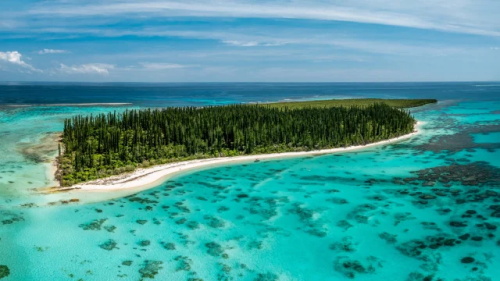
The most famous of the island’s beaches, Kuto Bay is a wide, crescent-shaped stretch of powder-white sand. Walking barefoot here feels like stepping on soft flour — the grains are so fine and delicate. Locals explain that the sand is made of coral particles, ground down over centuries by waves until they became perfectly smooth and pale. The bay’s waters are calm and shallow, making it ideal for swimming, wading, or simply sunbathing beneath the shade of the iconic pines.
2. Kanumera Bay
Just a short walk from Kuto Bay lies Kanumera Bay, another highlight of the island. Its waters are remarkably clear, glowing in hues of deep blue and turquoise. At the center of the bay rises a massive limestone rock, considered sacred by the local Kanak people. Visitors are asked not to climb it out of respect. The bay is a prime spot for snorkeling — beneath the surface lies a vivid coral reef teeming with schools of brightly colored tropical fish. Swimming here feels like entering a natural aquarium.
3. Oro Bay and the Natural Pool (Piscine Naturelle)
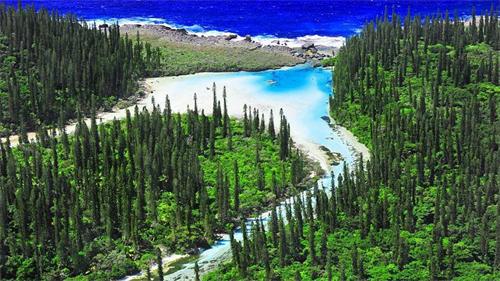
Perhaps the most magical attraction of the Isle of Pines is the Natural Pool at Oro Bay. Encircled by a reef, the lagoon forms a crystal-clear natural swimming pool where fish of every shade dart among coral gardens. Standing at the edge, you can see straight to the bottom, as if the water were made of glass. Reaching the pool involves a 20-minute walk through forests of towering Araucaria pines, adding a sense of pilgrimage to the experience. The nearby Le Méridien Resort offers convenient access for travelers.
4. Pic N’ga
For a panoramic view of the island, nothing beats a hike up Pic N’ga, the highest point on the Isle of Pines at 262 meters. The climb takes about one to one and a half hours, moderate in difficulty. From the summit, you can look out over the entire island, its shimmering lagoons, and the endless Pacific horizon. Many travelers time their hike to coincide with sunrise or sunset, when the sky and sea glow with unforgettable colors.
Historical Sites and Legends
The Penal Colony Ruins
In the 19th century, France used the Isle of Pines as a penal colony, sending convicts to this remote outpost of empire. Between the 1870s and early 1900s, some 2,000 prisoners were confined here. Today, moss-covered stone walls and crumbling ruins remain, whispering stories of hardship, exile, and survival. Wandering through the site, visitors are struck by the heavy silence and the sense of history carved into the landscape.
Queen’s Cave
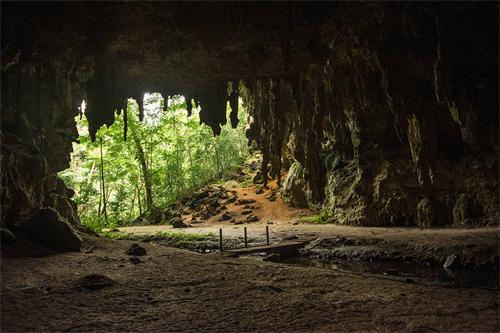
The island is also home to karst caves shrouded in legend. One of the most famous is the Queen’s Cave, tied to a tale of resistance and respect. According to local lore, a woman who was meant to inherit the position of chief faced opposition because of her gender. Forced to hide in the cave, she later traveled to Nouméa, learned French, and eventually married a Kanak man who became chief. Despite never ruling officially, she earned such admiration that she became known as the “Queen.” Inside the cave, you can still see the rock ledge where she rested. Islanders leave small offerings here, turning the cave into a site of cultural memory and spiritual reverence.
Vao Village and the Church of the Assumption
The island’s only village, Vao, remains a center of Kanak culture. Archaeological finds here include Lapita-era pottery and rock art, evidence of thousands of years of human habitation. The most striking building in the village is the Church of the Assumption, constructed in 1860 by convicts during their exile. Its simple stone façade and modest interior contrast with its powerful role as a spiritual refuge for prisoners who prayed for hope and redemption.
Saint Maurice Bay
At Saint Maurice Bay, travelers encounter a fascinating fusion of belief systems. Here stands a monument honoring the first Catholic missionaries to reach the island. Around it rise wooden totem poles carved by the local clans, decorated with images of turtles, mermaids, and human faces. This unique ensemble reflects both Kanak spirituality and the influence of Catholicism, blending two traditions into a single landscape of faith.
The Interplay of Culture and Nature
The Isle of Pines is often described as a place where culture and nature blend seamlessly. Wooden totem poles, carved with countless faces, stand in rows across the island, creating an atmosphere both mystical and profound. At sunset, when the orange glow of the sky casts long shadows over the totems, the island seems to whisper ancient stories carried by the sea breeze.
Interestingly, the island is also nicknamed the “Island of Crabs” because the Kanak people traditionally refrain from eating crabs. As a result, these creatures thrive in abundance across the beaches and forests.
Another surprising feature of the Isle of Pines is its vanilla plantations. Cultivated carefully in the tropical climate, local vanilla is renowned for its rich aroma and is used in everything from cuisine to perfumes and essential oils. A small bottle of Isle of Pines vanilla extract makes for a perfect souvenir.
Cuisine: A Fusion of French and Pacific Flavors
Dining on the Isle of Pines is an adventure in itself. Here, French culinary tradition meets South Pacific ingredients, producing flavors that are unique and memorable.
- One of the most celebrated dishes is the giant land snail, larger and more flavorful than the snails typically eaten in France. Cooked in garlic butter or stewed with herbs, they are a delicacy not to be missed.
- Another common dish is venison. Deer were introduced to New Caledonia in the 19th century and have since multiplied to the point of becoming invasive. Islanders have turned this ecological challenge into culinary opportunity: venison appears roasted, grilled, in stews, or even served raw as sashimi.
Meals are often accompanied by freshly caught seafood, tropical fruits, and, of course, fine French wine imported from the mainland.
Practical Information
- Best Time to Visit: The dry season, from May to October, offers cooler, more comfortable weather and calmer seas.
- Visa: Travelers holding a Schengen visa can enter New Caledonia without an additional visa.
- Currency: The local currency is the CFP Franc (XPF).
- Transportation:
- International flights arrive at Tontouta International Airport near Nouméa.
- Domestic flights to the Isle of Pines depart from Magenta Airport in Nouméa.
- On the island itself, car rentals are recommended, as public transport is minimal.
- Travel Tips:
- Respect local “tabu” (sacred) areas; do not enter restricted zones without permission.
- Most shops and businesses are closed on Sundays, so plan ahead.
The Isle of Pines: Paradise with Many Faces
The Isle of Pines is far more than a postcard-perfect island of sun, sand, and sea. It is a place where natural wonders meet cultural traditions, where colonial history coexists with indigenous spirituality, and where the flavors of France mingle with the bounty of the Pacific.
Here you can dive into World Heritage–listed lagoons, explore the haunting ruins of prisons, admire totem poles carved with timeless symbolism, and savor dishes that blend the best of two culinary worlds.
And finally, when you stand atop Pic N’ga, gazing out over the shimmering island and its infinite turquoise waters, you will understand why so many call the Isle of Pines “the closest place on Earth to paradise.”
Recommended for you: