


Jaguar Tracking in Brazil’s Pantanal: A Complete Dry Season Wildlife Guide
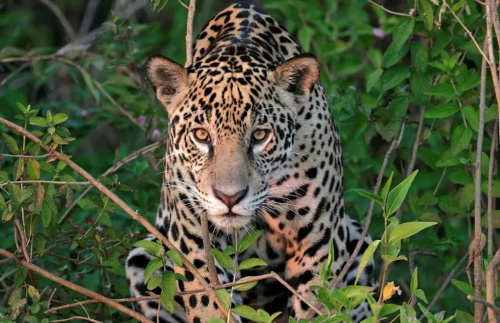
In the heart of South America lies a vast and mysterious wetland, hailed as the “Eden of Wildlife”—the Pantanal in Brazil. Stretching across Mato Grosso and Mato Grosso do Sul, and extending into neighboring Bolivia and Paraguay, this wetland is not only one of South America’s most important ecosystems but also a dream destination for nature enthusiasts worldwide. In 2000, the Pantanal was designated a UNESCO World Heritage Site. Its unique hydrological system, rich biodiversity, and breathtaking landscapes make it a paradise for photographers, eco-travelers, and wildlife observers.
Overview of the Pantanal
Covering approximately 170,000 square kilometers, the Pantanal is one of the largest tropical wetlands in the world. Its ecosystem is highly diverse, home to over 3,500 plant species, more than 650 bird species, and over 200 fish species. It also shelters numerous endangered species, including the giant otter, maned wolf, armadillo, Brazilian tapir, and capybara. Among all wildlife, the most thrilling inhabitants are the apex predators—the jaguars.
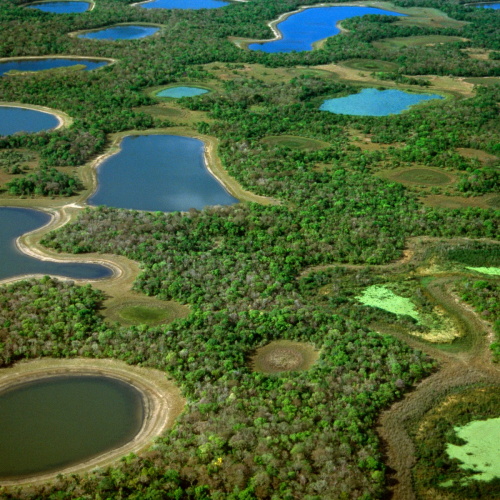
Jaguars are not only symbols of Brazilian wildlife but also the most exhilarating presence in this wetland. As the largest carnivorous cats in South America, jaguars can reach 1.9 meters in length, stand around 80 cm tall, and weigh up to 135 kg. Similar to leopards but with shorter tails resembling tigers, their distinctive facial structure makes them unique among cats. Jaguars originated roughly 2 million years ago in Eurasia and migrated to the Americas via the Bering land bridge, leaving deep footprints in the Pantanal today.
Jaguars are formidable hunters, preying on deer, armadillos, monkeys, lizards, turtles, and even caimans. They especially favor areas near water and are strong swimmers, excelling at ambushing prey. Caimans are often their favorite target; with powerful muscles and an astonishing bite, jaguars can easily pierce through their prey’s defenses. Studies show that jaguars’ teeth are like steel spikes, their limbs muscular, and their claws tough—allowing them to leap and capture targets with precision, almost like “spider-man” of the jungle, with speed and strength that prey cannot evade.
Tracking Jaguars in the Pantanal
The Pantanal hosts the highest jaguar density in the world, especially in the northern Pantanal, with around 2,000 jaguars residing in the area. They favor rivers, lakes, and wetlands, swimming like tigers and covering large territories. For visitors, the best way to observe jaguars is via a river safari. Navigating narrow northern waterways and marshes, experienced local guides detect potential jaguar locations using sounds, movements, and water signs. When a jaguar is spotted, guides communicate with other boats via radio, giving tourists the chance to safely observe these mysterious cats.
Northern Pantanal locations such as Porto Jofre and Parque Estadual Encontro das Águas are hotspots for jaguars. Each jaguar has a unique coat pattern and often a name. Some lodges even offer jaguar identification programs, allowing visitors to match what they see with guidebooks. This not only adds to the enjoyment of observation but also highlights the meticulous and scientific conservation efforts in the region.
Dry Season Ecology and Other Wildlife
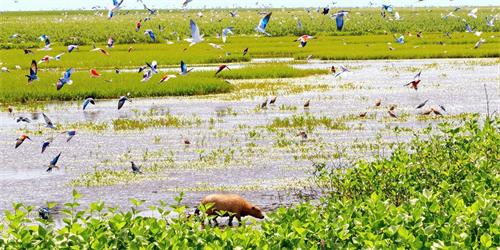
During the dry season (July to September), water levels drop, exposing more land and making wildlife easier to track and observe. Jaguars hunt along riverbanks and lakeshores, offering tourists the best chance of spotting them. Beyond jaguars, the Pantanal’s rich ecosystem features many other remarkable animals.
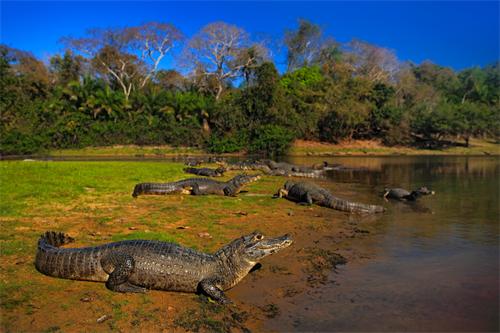
- Yacare Caiman: The primary aquatic predator of the Pantanal, especially concentrated in lagoons during the dry season. Adult males can reach 2.5 meters in length and live up to 75 years. Their diet mainly consists of fish, but they may also prey on herons, snakes, or young capybaras.
- Capybara: The world’s largest rodent, with nearly 500,000 in the Pantanal. They graze in groups, swim, and rest along the water’s edge. Their webbed feet make them excellent swimmers capable of prolonged dives to evade predators.
- Giant River Otter: Another unique resident, adult males can reach nearly 2 meters and weigh up to 32 kg. Unlike regular otters, they live in groups, hunt collectively, and defend territories—even driving off jaguars. About 7,000 giant river otters inhabit the Pantanal, each consuming around 4 kg of fish daily to stay healthy.
Best Wildlife Viewing Routes
The Pantanal is famous not only for its wetlands and wildlife but also for the “most beautiful road in Brazil” for wildlife observation. Constructed in the 1970s, it stretches 147 km from northern Poconé to southern Porto Jofre, crossing the Pantanal’s heart. With 125 bridges spaced approximately every kilometer, the road minimizes interference between vehicles and wildlife, allowing safe observation and photography from above while animals roam freely below.
Visitors’ role in the Pantanal is that of observers, not participants. Following the principle of “do not disturb, do not intervene” ensures both wildlife safety and ecological balance. Staying quiet and following guide instructions during tours is a key responsibility for all visitors.
Safely Entering the Pantanal
The Pantanal is vast, with many muddy or flood-prone roads. Wildlife moves quickly and can be aggressive, particularly jaguars. Therefore, it is recommended to enter via professional eco-lodges, mainly in northern and western Mato Grosso and Mato Grosso do Sul. These lodges offer guided experiences including river safaris, land tours, and night tracking, ensuring both safety and observation efficiency.
Recommended itineraries typically last 3–7 days, with accommodations near wetlands. Activities include river safaris, jungle treks, horseback exploration, and land-based safaris, providing a comprehensive experience of the Pantanal’s ecology. Essential gear includes binoculars, telephoto cameras, mosquito repellent, sunscreen, and rain protection to prepare for various conditions.
Travel Experience: Tracking Jaguars in the Pantanal
I visited the northern Pantanal during the dry season in July. Early mornings were shrouded in mist as our boat glided through narrow waterways, water calm as glass. The guide scanned the surroundings vigilantly, listening for subtle movements—every ripple could indicate a jaguar. Along the way, we saw groups of capybaras grazing by the river and a few caimans with heads barely above water, like ancient guardians.
In the afternoon, sunlight glimmered across the marshes as a giant river otter played at the water’s edge, chasing companions and splashing, a vivid display of nature’s vitality. Our guide explained that otter groups defend their territory and even challenge potential threats—including jaguars.
The most thrilling moment came at dusk. The boat approached a low shrub area. The guide whispered: “Up ahead, there might be a target.” Holding my breath, I focused on the water’s edge—two golden eyes flickered, moving slowly. The sleek, muscular body belonged to an adult jaguar, intently watching prey, occasionally drinking from the river, alert to its surroundings. Through binoculars, I could see the jaguar’s unique rosettes and muscular frame, perfectly blending with the natural environment. At that moment, I truly felt the power of the “king of the jungle” and understood why the Pantanal is called a jaguar haven.
Over the next few days, we explored the wetlands by boat and on foot. Every sighting, whether birds, lizards, or rodents, brought delight. The northern Pantanal during the dry season is breathtaking: vast wetlands, winding waterways, and frequent animal activity create a vibrant, unforgettable landscape.
Travel Tips and Packing List
- Best Time: Dry season (July–September), when water levels are low and jaguars are easier to spot along riverbanks. Trails are accessible for both boat and land safaris.
- Recommended Areas: Northern Pantanal—Porto Jofre and Parque Estadual Encontro das Águas—combining river and land safaris.
- Suggested Itinerary: Minimum 3 nights; 3–7 day packages recommended, staying in eco-lodges near wetlands.
- Essential Gear: Binoculars, telephoto camera, mosquito repellent, sunscreen, rain gear, comfortable non-slip shoes, lightweight waterproof clothing.
- Safety Advice: Always enter protected areas with official guides. Do not attempt independent travel. Follow the “do not disturb, do not intervene” principle.
In the Pantanal, you are not the protagonist but an observer of nature. By respecting the ecosystem and following guidelines, you can experience an unforgettable wildlife adventure—witness the majesty of jaguars, the expanse and tranquility of wetlands, and the thrill of true jungle exploration. The Pantanal is more than a trip; it is a living classroom of nature, inspiring awe for life and ecology in everyone who steps into it.
Recommended for you: