


The Ultimate Guide to One-Backpack Travel Across Diverse Destinations
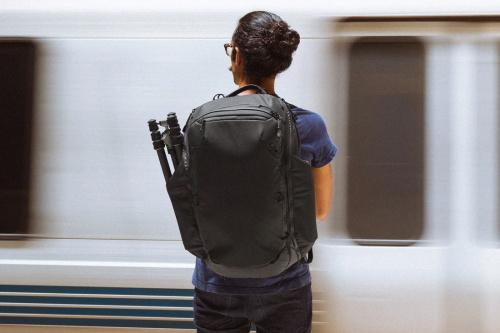
For many people, traveling still carries the image of dragging a heavy suitcase through airports and metro stations, always worrying about lost luggage, overweight fees, or even struggling in crowded streets with too many belongings. Yet, the essence of travel has never been about “how much you bring.” Instead, it is an opportunity to step back and reassess life itself. You may be surprised to discover that we actually need far fewer things than we imagine—and with less, we often find more freedom, more comfort, and more joy.
The secret to minimalist travel can be summed up in one principle: conquer the world with a single backpack. Whether you are exploring tropical islands near the equator or wandering through the unpredictable climates of Europe’s plateaus, one backpack—when packed intelligently—can be more than enough. By mastering scientific packing, making careful choices, and embracing flexibility, a single bag can support you across multiple climates, cultures, and travel styles.
I. Why Choose “One-Backpack” Travel?
1. Greater Freedom
Without checked luggage, there is no risk of loss or delay, and no feeling of being trapped by weight restrictions. With only a backpack, you can glide through airports, board trains faster, and even hike rural trails with ease.
2. Save Time and Money
Carrying only hand luggage spares you the expense of checked baggage fees and saves you from standing in long lines. Boarding and departure become smoother, allowing you to focus on the adventure itself.
3. Train a Minimalist Mindset
When you learn to meet daily needs with only a limited selection of items, you begin to understand what really matters. You’ll free yourself from the “just in case” mentality that clutters both your bag and your mind.
4. Improved Mobility
In situations where you need to change plans suddenly—catching a bus, running to make a transfer, or escaping bad weather—a backpack is easy to grab and go. Travel efficiency skyrockets.
Ultimately, travel is a kind of “life experiment.” It throws you into unfamiliar environments and challenges you to solve problems with minimal resources. That, in itself, is the essence and charm of one-backpack travel.
II. The Core of Packing: Modular Organization
To make one backpack work across different destinations, you need to embrace modular packing. Instead of randomly shoving items inside, break down your lifestyle into several essential modules. For each module, bring only the items that are absolutely necessary, while prioritizing multi-functional tools.
Module 1: Work and Efficiency
- Documents & Finances: Passport/ID card (with both paper photocopies and electronic backups), one credit card plus some cash (stored separately for safety).
- Electronics: Smartphone, earphones, charging cable, power bank. If remote work is needed, a lightweight laptop or tablet.
- Small Day Bag: A waist pouch or small cross-body bag to keep documents, cards, and cash accessible yet secure.
Module 2: Toiletries & Personal Care
- Basic Care: Toothbrush, small tube of toothpaste, and 50ml refillable bottles with shampoo/body wash.
- Space-Saving Hacks: Contact lens cases can hold small amounts of cream or sunscreen. Compressed towels and alcohol wipes are compact and hygienic.
- Special Tip: In a pinch, facial cleanser can double as shampoo—after all, scalp and face are both skin and primarily need oil and dirt removed. Travelers often find it leaves hair even fresher.
Module 3: Clothing (Layering Principle)
- Base Layer: Two quick-dry T-shirts and one long-sleeved undershirt.
- Mid Layer: A lightweight down jacket or fleece (compressible to fist-size).
- Outer Layer: A windproof and waterproof shell jacket.
- Bottoms: One pair of quick-dry pants, plus either shorts or yoga pants (which double as pajamas).
- Accessories: Two pairs of socks, a bucket hat, and a versatile scarf/headband.
- Footwear: Durable hiking shoes plus lightweight sandals or flip-flops.
Pro tip: Stick to neutral colors (black, white, gray). This way, all pieces can mix and match without looking mismatched. Change only the base layers frequently; mid and outer layers can be worn repeatedly.
Module 4: Safety & Emergencies
- Basic Medical Kit: Band-aids, anti-diarrheal tablets, antihistamines.
- Other Essentials: Small padlock, waterproof pouch for documents and electronics.
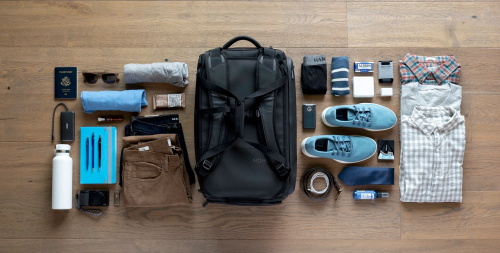
III. The Principle of Multi-Use
Every single item in your backpack should ideally serve more than one purpose.
- Waist Pouch: Functions as both a coin purse and a document holder.
- Insulated Bottle: Hydration container, wash cup, or even a makeshift food container.
- Scarf: Doubles as a shawl, blanket, or eye mask.
- Plastic Bag: Can carry laundry, act as a rain shield, or replace packing cubes.
By adopting this mindset, you maximize usage while minimizing burden.
IV. The Four Golden Rules of Minimalist Packing
1. Compress & Roll: Rolling clothes saves space. Down jackets compress well in vacuum bags.
2. Layer by Function: Heavy items (like shoes) at the bottom, clothing in the middle, frequently used items on top.
3. Multi-Purpose Thinking: A jacket liner becomes a pillow; a headscarf doubles as a sweat rag or hair tie.
4. Daily Reset: Spend five minutes each night reorganizing your pack—clear out old tickets, flyers, and anything unnecessary.
V. Avoid “Just in Case” Items
One of the biggest mistakes travelers make is overpacking for hypothetical scenarios. Most “maybe” items sit unused, yet weigh you down. Examples to leave behind:
1. Umbrella: Check the forecast before departure; if needed, disposable ponchos are lighter.
2. Physical Books: Use an e-reader or smartphone; realistically, downtime may be spent streaming shows.
3. Nail Clippers: Trim before the trip. For short journeys, you won’t need them.
VI. Smart Choices for Compact Living
1. Inflatable Neck Pillow: Packs down to wallet size when not in use.
2. Compressed Towels: Disposable, shrinking in volume as the trip continues.
3. Sheet Masks: Lightweight, require only water, and support skincare.
4. Foldable Cup: Rolls up easily, saves money on bottled water, and is eco-friendly.
5. Tampons: Far more compact than sanitary pads and better for water activities.
6. Smartphone Instead of Camera: Unless you’re a professional, a phone is sufficient.
7. Plastic Bags Instead of Pouches: Flexible, soft, and adjustable to fit into odd spaces.
VII. The Science of Packing
Packing is not “just stuffing things in.” It’s an intentional system that balances weight, space, and accessibility.
- Bottom Layer: Heavy items like shoes and pants. Shoes can be tucked along the side gaps.
- Middle Layer: Toiletries and folded clothes.
- Top Layer: Light T-shirts, towels, documents.
- Side & Gap Spaces: Fill with socks, underwear, or other soft items.
This method not only optimizes space but also keeps the backpack balanced when carried.
VIII. Dynamic Adjustments & Travel Tricks
- Three-Day Check-In: Every three days, review your consumables (meds, sunscreen, toiletries) and replenish as needed.
- Ship Instead of Carry: Buy souvenirs along the way but mail them home—don’t burden your pack.
- Relaxed Attitude: Flexibility is key. Don’t obsess about being “perfectly prepared.” Improvisation is part of the adventure.
IX. Final Thoughts: Travel as a Minimalist Experiment
Minimalist packing doesn’t mean suffering or depriving yourself. On the contrary, it is about choosing wisely so that every item in your backpack serves a real purpose. By reducing weight, you gain freedom. By carrying less, you create space—both physically and mentally—to focus on landscapes, cultures, and human encounters instead of worrying about baggage.
Travel, in many ways, is a rehearsal for life. When you learn to face varied climates, cultures, and challenges with only a single backpack, you realize that happiness and freedom were never about “how much you own.” Instead, they come from your ability to experience the infinite with the finite.
So pack that one backpack, embrace the adventure ahead, and set out to discover not only the world but also a lighter, freer version of yourself.
Recommended for you: