


Exploring Svalbard: Arctic History, Science, and Life at the Edge of the World
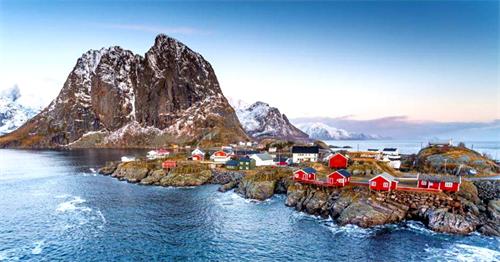
As the plane slowly descended toward the runway in Longyearbyen, the capital of Svalbard, I peered out of the window and was greeted by a stark landscape of glaciers and valleys stretching endlessly toward the horizon. In that moment, it truly struck me—I was stepping onto a fragment of the world that lies at the very edge of civilization.
The Svalbard archipelago, whose name in Old Norse translates to “the land with cold coasts,” lies deep within the Arctic Circle, between latitudes 74°N and 81°N. This is a realm of midnight sun and endless winter darkness, a sanctuary for the northern lights, and the true kingdom of the polar bear. It is also one of the last frontiers where humans have managed to carve out permanent settlements so close to the North Pole.
For travelers, Svalbard offers not merely an adventure into icy wilderness but also a unique dialogue with history, science, and raw, untamed nature.
First Stop: Longyearbyen — The World’s Northernmost Town
Nestled within the valley of Adventfjorden on the island of Spitsbergen, Longyearbyen is both the administrative hub of Svalbard and one of the northernmost towns on Earth. Surrounded by dramatic mountains and glaciers, it feels isolated yet oddly vibrant. Despite having only around 40 kilometers of roads in total, the settlement is divided into distinct areas: the compact town center with its hotels, restaurants, bars, and shops, and the quieter “Nybyen” district, where former miners’ barracks now serve as student housing, guesthouses, and art studios.
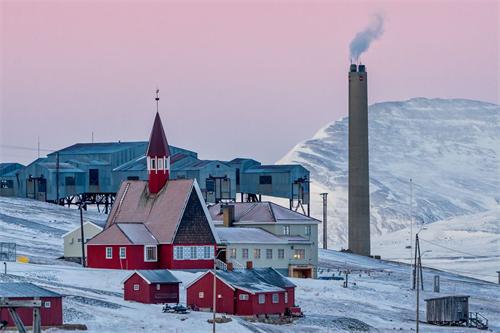
Walking along what is considered the world’s northernmost pedestrian street, one quickly realizes that Longyearbyen doubles as a duty-free haven. Shops are filled with Arctic minerals, silver jewelry, leather goods, and high-quality outdoor gear. Even a casual shopping stroll here feels infused with the essence of the far north, as though every purchase carries with it a fragment of polar identity.
Footprints of History and Culture
Svalbard Museum
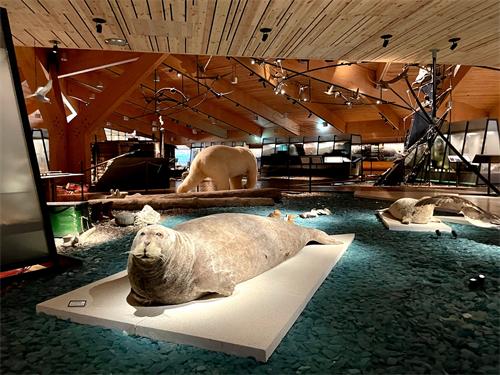
To truly understand the archipelago, a visit to the Svalbard Museum is the best starting point. The modern exhibits trace the region’s full history: from the brutal era of whaling, through the coal mining industry that gave birth to the settlements, to today’s focus on science and ecological preservation. Displays include whalers’ tools, miners’ equipment, and carefully preserved specimens of polar bears, walruses, and Arctic foxes. The museum captures not just the human struggle against the cold, but also the resilience of Arctic wildlife. A thorough visit takes at least an hour. Admission is 160 NOK, and it is worth every moment.
North Pole Expedition Museum
A more specialized collection awaits at the North Pole Expedition Museum, founded by two long-term residents of Svalbard. Here, the focus is on the daring attempts of the early 20th century to conquer the North Pole. Artifacts and documents recount the dramatic stories of airship voyages, ski expeditions, and tragic failures. Walking through its halls, I often paused in awe, reflecting on the immense courage—and sometimes sheer recklessness—of those explorers who risked everything for a place in history.
Svalbard Church
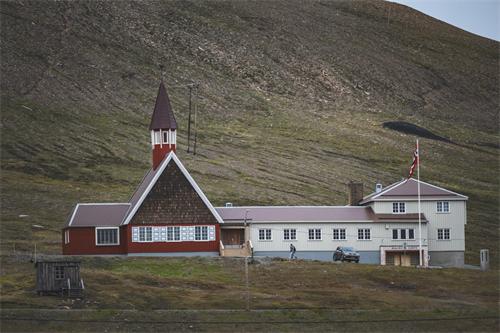
Another landmark in Longyearbyen is the Svalbard Church, the northernmost church in the world. Unlike the towering cathedrals of Europe, this wooden structure radiates warmth and simplicity. Inside, in a corner, stands a taxidermy polar bear, a poignant reminder of the harsh environment outside. The current church was built in 1958 after the original, erected during the early mining days, was destroyed in World War II bombings. Today, it continues to serve not only as a religious site but also as a communal gathering place, offering solace in an otherwise stark and challenging environment.
The Frontiers of Arctic Science
The University Centre in Svalbard (UNIS)
On the outskirts of Nybyen stands UNIS, the University Centre in Svalbard, the northernmost university in the world. Established in 1992, UNIS is dedicated to Arctic ecology, climate science, and environmental studies. Its campus buildings, constructed with durable wood and reinforced designs, are engineered to withstand polar storms and heavy snow loads. Solar panels and advanced heating systems ensure functionality even during the extreme polar night. Walking around the campus feels like stepping into a “laboratory of the future,” a place where humanity pushes the limits of knowledge in one of the harshest climates imaginable. UNIS symbolizes the spirit of exploration and research that keeps Longyearbyen on the global scientific map.
The Global Seed Vault
Perhaps Svalbard’s most famous scientific site is the Svalbard Global Seed Vault, often referred to as humanity’s agricultural “Noah’s Ark.” Built deep inside a mountain, it houses duplicates of seed samples from gene banks worldwide, safeguarding them against wars, natural disasters, or climate change. Although the vault is not open to the public, visitors can glimpse its illuminated entrance during town tours or bus rides. Seeing that glow against the frozen mountainside evokes a sense of humility—it is a reminder that the future of global agriculture rests, quite literally, at the edge of the Arctic.
A Taste of the Arctic
Even in the icy wilderness, there are flavors that surprise. The Svalbard Brewery, the world’s northernmost brewery, crafts beer using water drawn from 3,000 meters beneath the ice. During a guided tour, the brewers explain how glacial water, frozen for millennia, transforms into crisp, refreshing brews. Tasting a pint here is not just about savoring beer; it feels like toasting to the resilience of life in one of the planet’s most inhospitable corners.
Chasing the Northern Lights
Svalbard is unique in that it is the only place on Earth where one can see the northern lights even during the day. On my visit, I joined an “Aurora Bus Tour” that ventured about ten kilometers outside Longyearbyen, toward the Barentsburg camp. Away from light pollution, the sky opened up in a cascade of shifting colors. Green and violet ribbons danced overhead, swirling like celestial dancers across the dark canopy. That night, the biting cold disappeared from my thoughts; all I felt was a profound connection to the universe.
Arctic Cruises: Venturing Deeper into the North
For those who wish to extend their Arctic adventure, Svalbard offers unforgettable expedition cruises. Operators like Hurtigruten run voyages that explore seven national parks and 23 nature reserves across the archipelago.
Highlights include:
- Monaco Glacier: Towering ice cliffs stretching over five kilometers. This is one of the favorite hunting grounds of polar bears. With luck, travelers may spot them pacing along the ice edge.
- Sjuøyane (Seven Islands): The northernmost stop of many cruises, reaching latitude 80°N—just 870 kilometers from the North Pole. Polar bears often roam the drifting pack ice, while ships linger quietly for hours, allowing for silent observation.
- Whales and Fjords: At the mouth of Kongsfjorden, humpback and fin whales breach the surface, while seabirds like the Brünnich’s guillemot and Atlantic puffin nest by the thousands on towering cliffs.
Despite the remoteness, most cruises travel in calm inland waters, making them accessible even for travelers prone to seasickness.
A Sanctuary for Wildlife
In Svalbard, polar bears—known locally as Isbjørn, or “ice bears”—are the undisputed rulers. Their population exceeds that of human residents, and their presence defines the rhythm of life here. Yet the archipelago’s wildlife diversity extends far beyond bears: Arctic foxes, reindeer, walruses, and even the elusive Arctic wolf share this frozen domain.
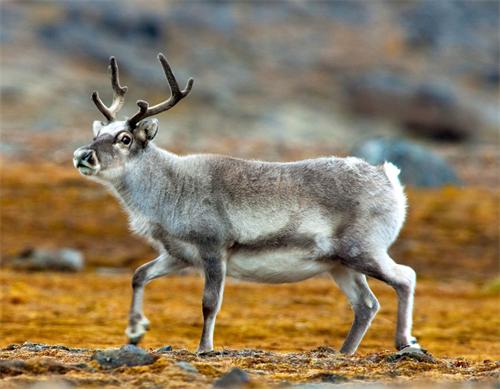
The Svalbard reindeer, a smaller and stockier subspecies, has roamed the islands for over 5,000 years. During summer, more than 40 species of seabirds arrive to breed, turning cliffs and skies into chaotic symphonies of wings and cries. Whether spotting a whale from the deck of a ship or stumbling across a reindeer herd while hiking, encounters with wildlife here are deeply moving—reminders that nature still rules in the far north.
Travel Tips
- Best Time to Visit: May to September is ideal for cruises, glacier exploration, and wildlife viewing under the midnight sun. From late November to mid-February, the polar night envelops Svalbard in darkness, creating prime conditions for northern lights photography.
- Getting There: Daily flights connect Longyearbyen to Oslo and Tromsø. Within town, shuttle buses run regularly between the airport and hotels. Alternatively, expedition cruises depart from mainland Norway and sometimes include stops in Greenland or Iceland.
- Accommodation: Longyearbyen has a small but diverse selection of lodges, from cozy hostels to upscale hotels. Advance booking is essential during summer.
- Safety Note: Leaving town without a firearm or an armed guide is strictly prohibited. Encounters with polar bears are unpredictable and potentially fatal—this rule is non-negotiable and taken seriously by authorities.
The Silence and Power at the Edge of the World
As I prepared to leave Svalbard, I glanced back across the frozen valley from the airport. No skyscrapers, no traffic jams—only snowcapped peaks, glaciers, and the soft shimmer of the aurora.
Svalbard is more than just a destination; it is a window into the raw forces of nature and a mirror reflecting humanity’s fragility. Traveling here feels like a form of purification, a chance to shed the noise of modern life and experience the primal bond between human beings and the Earth.
Exploring Svalbard is not merely about adventure—it is about rediscovery. Under the Arctic winds and the lights of the aurora borealis, one finds a renewed sense of life’s meaning and the profound humility that comes from standing at the edge of the world.
Recommended for you: