


Riding the End of the World Train: Ushuaia to Tierra del Fuego National Park
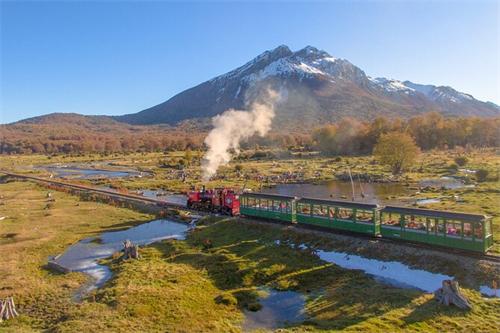
When you think of “the end of the world,” your first image might be the remote southernmost wilderness on the map, or a mysterious island beckoning from afar. In Argentina’s Tierra del Fuego, this title is not just metaphorical—it’s real. And here, a historic railway—the “End of the World Train”—takes you across the southern tip of the Andes and through pristine forests, straight to Tierra del Fuego National Park.
Ushuaia: The Southernmost City in South America
Ushuaia is Argentina’s southernmost city and the main gateway to Antarctica. With a population of around 190,000, the city lies between the Andes mountains and the Beagle Channel, offering panoramic views of the vast ocean and nearby snow-capped peaks. Ships bound for Antarctica dock at its port, and at night, the city lights reflect on the icy waters, creating a quiet, almost mystical scene.
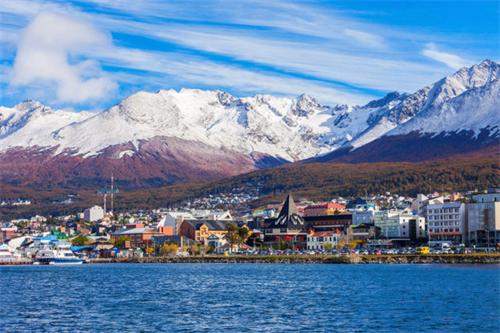
Ushuaia’s history is legendary. From the late 19th to early 20th century, the Argentine government exiled prisoners here to maintain control over the remote frontier and aid in its development. The prison made this remote town a unique cultural and historical hub. Over time, as the number of prisoners decreased and the prison closed, Ushuaia welcomed immigrants from around the world, diversifying its population and culture. Today, Ushuaia is not only a hub for Antarctic travel but also a distinctive tourist destination.
History and Charm of the End of the World Train
The “End of the World Train” (Tren del Fin del Mundo) is one of Ushuaia’s most iconic tourist attractions. Its history dates back to the early 20th century. Originally called the “Southern Tierra del Fuego Railway,” it was mainly used to transport timber cut by prison inmates. Construction began in 1902, with prisoners and local workers overcoming Tierra del Fuego’s harsh climate and terrain to complete the roughly 7-kilometer railway.
However, as timber resources dwindled and the prison population declined, the railway ceased operations in 1952 and gradually fell into disrepair. In 1994, the local government restored the railway as a tourist attraction, allowing visitors to experience Tierra del Fuego’s natural beauty and historical sites. Today, it is one of the southernmost railways in the world and offers a unique way to explore Ushuaia’s wilderness and history.
From Ushuaia, the train passes towering Andes peaks, winding rivers, sub-Antarctic forests, and traces of historic logging. In summer, cut stumps lie flush with the ground; in winter, they protrude high above the snow—small details that transport passengers back to the harsh labor endured by the prisoners.
The Train Journey Experience
The journey begins at End of the World Station (Estación del Fin del Mundo), about 8 kilometers west of Ushuaia. Passengers board the train and embark on a roughly 1 hour 50-minute ride. The train’s vintage design—with narrow tracks, wooden carriages, and corduroy seats—evokes a nostalgic atmosphere. As the locomotive whistles and slowly departs, passengers are greeted by green forests, the Pipo River (Río Pipo), La Macarena Waterfall, and Lenga forests through the windows.
At La Macarena Station, the train makes a brief stop, allowing passengers to walk to the waterfall and overlook the Pipo River valley. The train then continues toward the national park’s terminus. Traveling through winding valleys, dense forests lie at the base of distant snow-capped peaks, and rivers shimmer amidst fresh greenery. The serene scenery and historical traces blend together, immersing travelers in the unique charm of Tierra del Fuego.
Departure Times & Tickets:
- Departure times: 9:30 AM, 12:00 PM, and 3:00 PM daily
- Duration: ~1 hour 50 minutes one-way
- Train ticket: ~$90 USD
- National park entrance: ~30,000 ARS (cash only)
- Combined package (train + park): from ~$145 USD
Advance booking is recommended, especially during the peak tourist season (November–March).
Tierra del Fuego National Park
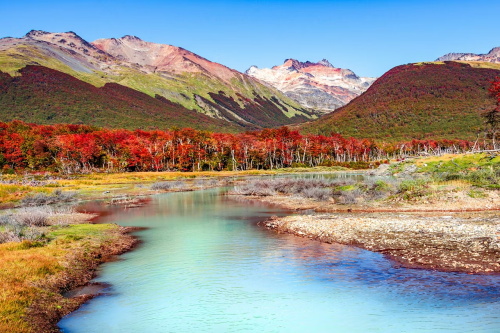
Established in 1960 and covering approximately 68,909 hectares, Tierra del Fuego National Park lies 12–14 km west of Ushuaia. The park encompasses mountains, rivers, lakes, coastline, and sub-Antarctic forests, making it a paradise for nature lovers. Bahía Lapataia at the park’s western end is the most popular site and marks the southern end of the Pan-American Highway.
From the station, visitors can follow short or medium trails, such as Sendero Laguna Verde or Sendero Coihue, through forests, wetlands, and lakes to experience Tierra del Fuego’s unique ecosystems. Along the trails, you’ll find untouched woods, moss-covered wetlands, and turquoise lakes shimmering under the sun.
Laguna Esmeralda (Emerald Lagoon)
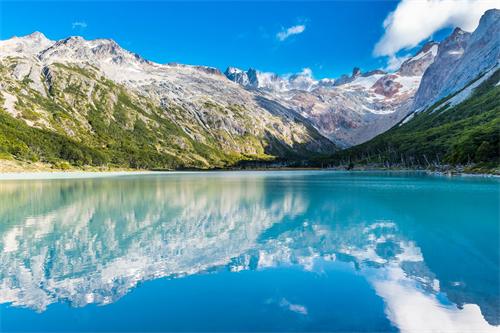
About 20 km from Ushuaia, Laguna Esmeralda is famed for its clear turquoise waters, contrasting with surrounding snow-capped peaks, forests, and peat bogs. The hiking route starts at Valle de Tierra Mayor, spanning 9.4 km round-trip (~4–5 hours, moderate difficulty). Best visited between November and March.
Transportation options:
- Bus: departs ~10:00 AM, ~$5–6 USD
- Taxi/private transfer: ~$30–50 USD one-way
- Hiking: for adventurous travelers
Martial Glacier (Glaciar Martial)
Located ~7 km north of Ushuaia, at 800–1,200 meters above sea level, the glacier is one of the city’s top outdoor activities. Routes include:
- Martial Glacier Base Trail: ~2–3 hours round-trip, suitable for casual hikers
- Summit Trail: for experienced hikers, offering panoramic views of the city and Beagle Channel
After hiking, enjoy hot chocolate at La Cabaña Casa de Té at the glacier’s base.
Beagle Channel & Lighthouse

The Beagle Channel separates Tierra del Fuego from the southern islands and connects the Atlantic and Pacific Oceans. From Ushuaia’s port, you can take boat tours to see the Faro Les Éclaireurs Lighthouse, sea lions, seals, and a variety of seabirds. Many confuse this lighthouse with the “End of the World Lighthouse” on Estado Island, but either way, the cruise is both visually and spiritually rewarding.
Cultural Sites & Dining in Ushuaia
End of the World Museum (Museo del Fin del Mundo)
Housed in the old prison, the museum opened in 1994, showcasing Ushuaia’s penal history, Tierra del Fuego culture, and a replica of the “End of the World Lighthouse.”
- Opening hours: 9:00 AM–6:00 PM
- Ticket: ~450–500 ARS
Almacén de Ramos Generales
A downtown restaurant designed like a vintage Tierra del Fuego general store, serving French pastries, paninis, lamb dishes, locro (corn and vegetable stew), lemon cake, and tiramisu. Advance reservation is recommended.
Transportation & Travel Tips
From Ushuaia to Tierra del Fuego National Park:
- Self-drive: via Ruta 3 with clear signage
- Tour bus/shuttle: city agencies offer day tours including Bahía Lapataia
- Taxi/private transfer: ~$20–30 USD one-way
The End of the World Train offers a unique sightseeing experience combined with hiking and photography. The journey can be completed in half a day to a full day.
Best time to visit & precautions:
- November–March is ideal, with moderate temperatures and suitable for outdoor activities
- Winter (June–September) is cold; some facilities may close
- Book train tickets and park entrance in advance
- Park tickets are cash-only
- Choose hiking trails according to your fitness level; carry windproof and rainproof gear
- Respect park regulations and preserve the natural ecosystem
From Ushuaia, take the End of the World Train through pristine forests, rivers, and snow-capped mountains to Tierra del Fuego National Park. This journey feels like a trip through time, blending history, nature, and culture.
Pause at La Macarena Waterfall for photos, stroll along Bahía Lapataia, gaze over the blue waters of the Beagle Channel, hike to Laguna Esmeralda to enjoy its green waters and quiet mountains, climb Martial Glacier for panoramic city views, and finish your day in Ushuaia with hot chocolate or French desserts.
This trip is more than sightseeing—it’s an immersive experience of history and nature. The End of the World Train, Tierra del Fuego National Park, Laguna Esmeralda, Martial Glacier, Beagle Channel, and its lighthouses—all touch the traveler’s heart, offering the splendor of nature and the depth of human history at the southernmost tip of South America.
Recommended for you: