


Tracking African Wild Dogs: A 5-Day Safari Adventure in Sabi Sand, South Africa
At the southern tip of the African continent lies a vast wilderness where nature thrives in its purest and most untamed form. This is a land of sweeping savannas, winding rivers, and dense thickets. At night, the deep roars of lions echo through the darkness, giraffes move gracefully between clusters of trees, and herds of elephants and buffalo gather at precious waterholes. Among all the wildlife destinations in Africa, one of the most captivating is the Sabi Sand Private Game Reserve, directly adjacent to the world-famous Kruger National Park.
Unlike a casual “animal-spotting” trip, a true safari is a profound dialogue between human beings and the natural world. And when your purpose is as thrilling as tracking the elusive African wild dog, every tire track in the dirt, every rustle in the undergrowth, and every birdcall could signal the beginning of an unforgettable adventure.
Why Choose South Africa’s Sabi Sand?
For many visitors, South Africa embodies a dream: sunshine, clean air, subtropical vegetation, and, above all, free-roaming wildlife. The country’s safari camps are usually located inside national parks or on private reserves, all of which are carefully managed to maintain an authentic ecosystem.
Yet among the many choices available, Sabi Sand stands in a league of its own. Situated in the country’s northeast, bordering Kruger National Park, Sabi Sand has no fences separating it from Kruger, allowing animals to migrate freely. Here you will not only find the celebrated “Big Five”—lion, leopard, elephant, buffalo, and rhino—but also rarer species such as the African wild dog, honey badger, ground hornbill, and hundreds of bird species. For wildlife photographers and nature enthusiasts, it truly is a dreamlike kingdom of animals.
Unlike Kruger, which is managed as a national park, Sabi Sand is a private reserve with stricter regulations. The animals here have grown accustomed to safari vehicles and do not see them as a threat, which allows visitors to observe their behavior from remarkably close distances without disrupting the natural order. At the same time, Sabi Sand offers luxurious lodges, personalized guiding, and tailor-made tracking experiences—an elegant fusion of adventure and comfort.
The Role of Biologists and Guides
Many people assume a safari is nothing more than “riding in a jeep and looking at animals.” In truth, the presence of a professional biologist and an experienced safari guide is what transforms an ordinary trip into a once-in-a-lifetime learning experience.
- They interpret how ecosystems function: how savannas sustain grazing animals, why wetlands act as vital resting points for migratory birds, and how desert plants manage to endure extreme conditions.
- They decode animal behavior: why cheetahs prefer hunting at dawn, how rhinos use scent to mark territories, and what drives the seasonal migrations of birds.
- They share the challenges of conservation: poaching, shrinking habitats, and policy hurdles, as well as the innovative strategies South Africa has adopted to protect its wildlife.
These insights elevate the journey from mere sightseeing to an ecological classroom, encouraging travelers to reflect deeply on humanity’s relationship with the natural world.
African Wild Dogs: Elusive Spirits of the Bush
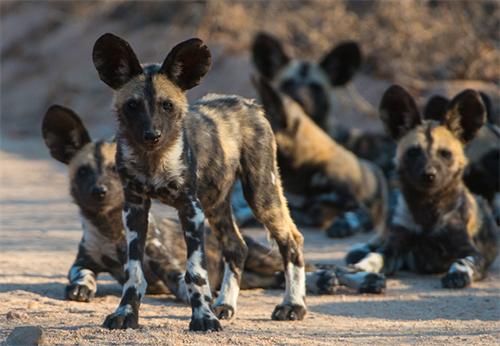
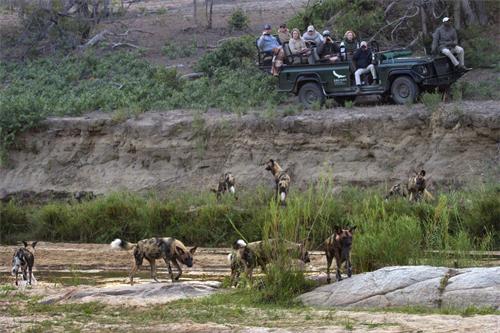
Among all the creatures of the wilderness, few stir the imagination quite like the African wild dog. Once widespread, they are now extremely rare, with fewer than 3,000 individuals surviving in the wild. They are listed as endangered by the IUCN.
Wild dogs live in tightly knit packs and are celebrated for their remarkable teamwork. During a hunt, they rely on short, sharp vocalizations and subtle body signals to coordinate seamlessly, often succeeding in bringing down prey within minutes. Their pack cohesion is one of the most impressive examples of natural cooperation in the animal kingdom.
At first sight, their appearance may seem unremarkable: lean bodies covered in irregular patches of brown, black, and white fur. Yet once you watch them hunt or play together, you immediately grasp why they are considered among Africa’s most formidable predators. If fortune smiles on you, you might spot them napping in the shade of acacia trees, or, even more dramatically, witness a high-speed chase across the plains.
A Shift in History: From Persecution to Protection
The history of conservation in South Africa has its darker chapters. In the 19th century, the country’s wildlife was decimated by relentless hunting. By the early 20th century, awareness began to grow, leading to the signing of the Convention for the Preservation of Wild Animals, Birds, and Fish in Africa.
Even Sabi Sand’s early warden, James Stevenson-Hamilton, once considered wild dogs “vermin” and shot them to protect other game. Today, however, the wild dog is recognized as a treasured species, strictly protected and closely monitored. This stark reversal in attitude highlights how fragile wildlife once was—and why every sighting of these elusive dogs in Sabi Sand feels like a miracle.
When Is the Best Time to Visit?
A safari can be enjoyed year-round in South Africa, but the dry season (May–September) is generally considered the best time:
- Vegetation is sparse, making it easier to spot animals as they gather around water sources.
- Tourist numbers are lower, often leading to more affordable rates.
- The crisp winter light is ideal for photography.
The wet season (October–April) brings lush green scenery and newborn animals but also makes wildlife harder to see, as dense foliage provides them with cover.
Practical Information: Rules and Costs
- Opening hours: Sabi Sand is open daily from 06:00 to 22:00.
- Entry restrictions: Only guests staying in the lodges are permitted to enter; walk-in visitors are not allowed.
- Conservation levy: A mandatory fee, separate from accommodation costs, goes directly toward conservation efforts.
- Accommodation: Most lodges include two game drives per day—one at dawn and one at dusk. Depending on the camp, night drives and guided walks may also be offered.
- Photography gear: A telephoto lens of at least 200mm is recommended. Smartphone users can enhance their shots with clip-on binocular adapters. The best light occurs during the “golden hours” of 6–9 a.m. and 4–6 p.m.
Kruger National Park: Sabi Sand’s Neighbor
If Sabi Sand is the intimate and exclusive side of the wilderness, Kruger National Park is its grand stage. Covering nearly 20,000 square kilometers, Kruger is one of the world’s most biodiverse reserves. It also hosts the Big Five, along with countless other mammals, reptiles, and bird species. Since no fences separate it from Sabi Sand, animals roam freely between the two.
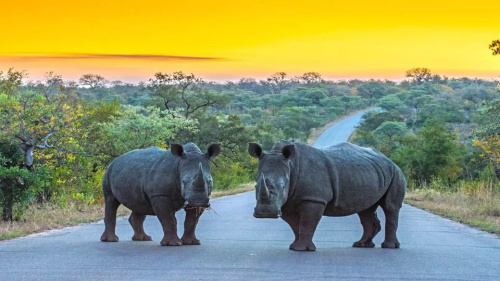
However, Kruger’s character differs from its private neighbor. Visitors must stay on marked roads, remain inside their enclosed vehicles, and follow strict park rules. Its terrain is dominated by tropical savanna and thornveld, with the dry season (June–September) offering the clearest wildlife viewing opportunities. Compared to Sabi Sand’s exclusivity, Kruger provides a more accessible, budget-friendly safari experience.
MalaMala: The Pinnacle of Wilderness Luxury
Between Sabi Sand and Kruger lies MalaMala Game Reserve, a legendary name in safari circles. Encompassing 13,300 hectares with a 19-kilometer unfenced border shared with Kruger, MalaMala offers an extraordinary variety of landscapes—woodlands, riverine forests, rocky hills—that make for superb wildlife encounters.
MalaMala is renowned for its luxury lodges and meticulous commitment to sustainability: river-supplied water, recycled waste, careful sourcing of food, and eco-friendly construction all ensure minimal environmental impact. It is also famous for being the first South African reserve to transition from trophy hunting to photographic safaris, building over 55 years of expertise in wildlife tourism.
Suggested Itinerary: A 5-Day Safari Adventure
Day 1
Arrive at Johannesburg International Airport and connect to a domestic flight to Sabi Sand. Check into your lodge and enjoy your first evening game drive, watching the sun dip below the horizon in the African bush.
Day 2
Head out at dawn to track the Big Five, returning to camp for a hearty brunch. Spend the afternoon relaxing at the pool or spa. As evening falls, embark on another game drive—perhaps enjoying sundowners in the bush—and stay out after dark to spot leopards or hyenas.
Day 3
After breakfast, take a short flight to Kruger National Park. Settle into a riverside camp with stunning views of the Sabie River.
Day 4
Dedicate the entire day to exploring Kruger. With luck, you may witness a predator-prey drama unfold: lions stalking buffalo, or a pack of wild dogs chasing antelope across the plains.
Day 5
After a leisurely breakfast, board a light aircraft back to Johannesburg or continue onward to Cape Town, bringing your safari to a close.
The Magic of Safari: An Unpredictable Mystery
A safari is not like a zoo visit with guaranteed sightings. In the African wilderness, every day is an unpredictable mystery box. Some days, you might witness lions coordinating a hunt. Other times, you may see nothing but a few warthogs scurrying into the brush. This very uncertainty is what makes the experience so thrilling.
A five-day safari may feel short, but the memories it creates last a lifetime. When you finally find yourself in the misty dawn, watching a rare pack of African wild dogs streaking across the open savanna, you realize something profound: every living being here, from the smallest bird to the mightiest elephant, is writing its own story of survival, resilience, and hope.
Recommended for you: