


A Sensory Overload: Navigating the Colorful Spice Markets of Rajasthan
If Rajasthan, India, could be summed up in a single phrase, it would be “a symphony of colors and aromas.” This northwestern state, sharing its western border with Pakistan, is largely covered by the Thar Desert, yet it has given birth to an extraordinarily rich culture and a kaleidoscope of flavors. Known as the “Land of Kings,” Rajasthan was once a mosaic of princely states, each rising and falling with the tides of history. The legacy of those dynasties endures in the intricately carved palaces, formidable forts, and ornate temples that dot the land. Rajasthan was the stage for countless tales of medieval knights, royal courts, and legendary heroes.
But behind the grand architecture and storied past lies something more immediate, something that greets every traveler the moment they step into a bustling bazaar: the intoxicating aroma of spices. To wander through Rajasthan’s markets is to step into a theater of the senses. The eyes are assaulted by brilliant splashes of color, the nose by an ever-changing mixture of sweet and pungent scents, and the ears by the constant rhythm of bargaining voices. The tongue discovers layers of flavor in every street snack, while the hands feel the textures of spice sachets, fabrics, and hot food passed to you straight from the vendor’s pan.
First Stop: Jaipur — Spices and Sweets in the Pink City
Jaipur, the state capital, was founded in 1727 by Maharaja Jai Singh II. Situated about 268 kilometers from New Delhi, it is often the first encounter travelers have with Rajasthan. Its nickname, the “Pink City,” dates back to the 19th century, when the local rulers painted the entire city in rosy sandstone hues to welcome the Prince of Wales. That dusty pink, now iconic, remains Jaipur’s most recognizable symbol.
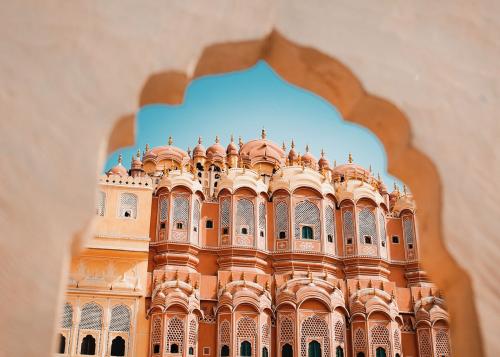
Just outside the city lies Amber Fort, the most celebrated of Jaipur’s monuments. Built from red sandstone and white marble, the fort perches on a hilltop, its architecture a blend of Rajput and Mughal traditions. From its walls, one sees that Jaipur is not uniformly pink but a layered canvas of reds, painted murals, and detailed ornamentation.
The Spice Markets of Jaipur
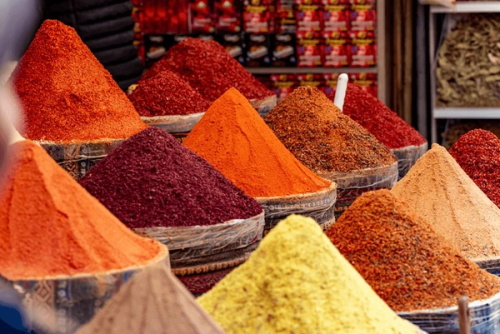
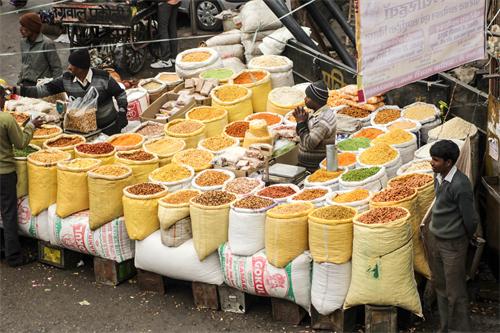
To truly feel the sensory overload of Jaipur, one must dive into its bazaars. Tripolia Bazaar is the city’s quintessential spice market. The air here is perpetually perfumed with cumin, cardamom, and turmeric. Spices are heaped into enormous burlap sacks: golden turmeric, fiery red chili powder, deep green herbs, all arranged like pigments on an artist’s palette.
Nearby, Bapu Bazaar offers a more eclectic experience. Alongside spice stalls, you’ll find vendors selling colorful saris, handwoven carpets, leather goods, and silver jewelry. The juxtaposition of aromas and textures—chili powder mingling with incense, spices stacked next to textiles—captures India’s unique philosophy of organized chaos.
Street Food You Can’t Miss
Jaipur’s culinary culture is as vibrant as its bazaars. Beyond buying spices, you must try the local street foods:
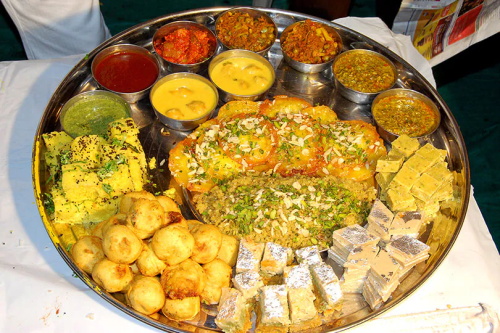
- Kachori – Deep-fried dough stuffed with potatoes, onions, and a rich mixture of spices. Crispy on the outside and juicy inside, it’s often served with tangy chutneys that make the flavors unfold in layers.
- Ghevar – A honeycomb-like sweet, crispy and delicate, usually soaked in sugar syrup and topped with nuts. It is indulgent yet surprisingly light.
- Gatte Ki Sabji – Chickpea flour dumplings simmered in a tangy, spicy curry. This dish is a beloved Rajasthani staple, bringing together comfort food and bold flavors.
In Jaipur, you realize that the Pink City’s hues extend beyond architecture—they are alive in every morsel of food, every handful of spice, every corner of the market.
Second Stop: Udaipur — Romance and Royal Aromas in the City of Lakes
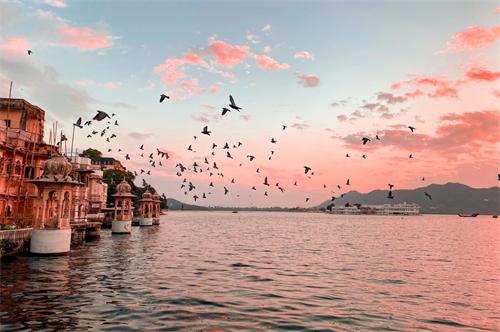
If Jaipur is a city of energy and commerce, Udaipur is its romantic counterpart. Nicknamed the “Venice of the East,” it is renowned for its man-made lakes and opulent palaces. In 1557, King Udai Singh built a dam to collect water, transforming a desert edge into a city of shimmering lakes.
The City Palace and Its Peacock Courtyard
The City Palace, perched above Lake Pichola, is Udaipur’s crown jewel. Inside, mosaic peacocks crafted from colored glass and gemstones shimmer in the sunlight, epitomizing royal grandeur. As you wander through courtyards paved in white marble, the faint fragrance of sandalwood drifts through the air—a reminder of the incense used in royal rituals and temple ceremonies.
The Monsoon Palace
Another highlight is the Monsoon Palace, set on a hilltop overlooking the city. In July and August, clouds roll in, shrouding the palace in mist while monsoon winds whistle through its arches. Locals counter the damp weather with traditional spiced drinks—warm milk infused with turmeric and cinnamon—that not only comfort the body but also align with Ayurveda’s principles of balancing the body’s energies, known as the doshas.
Udaipur, with its lakeside serenity, palaces, and aromatic traditions, reveals Rajasthan’s softer, more poetic side.
Third Stop: Jodhpur — A Sea of Blue and a Market of Spices
Arriving in Jodhpur, one is immediately struck by the vast expanse of blue houses spreading out beneath Mehrangarh Fort. This “Blue City” looks like a sapphire set in the ochre sands of the desert.
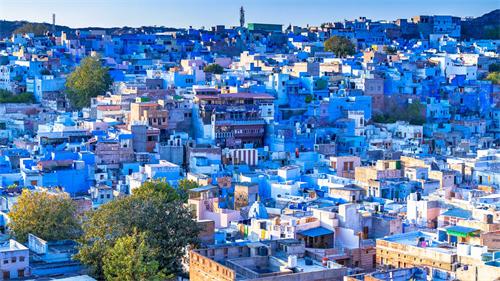
Why blue? Some say it was a symbol of the Brahmin caste, while others argue it helped repel insects and reduce heat. Scientifically, the copper sulfate in the pigment does indeed cool interiors, lending the city both practicality and beauty.
Sardar Market and the Clock Tower
Jodhpur’s bustling Sardar Market, near the Clock Tower, is a paradise for spice lovers. Turmeric, cumin, cardamom, chilies—every stall seems to compete in fragrance and color. Some aromas are sharp and fiery, others cooling and sweet, inviting passersby to pause, inhale deeply, and perhaps carry some of Rajasthan’s magic home.
The market also sells handicrafts, fabrics, and daily goods. Bargaining is not just encouraged—it’s expected. Vendors start with high prices, and the art lies in negotiating with a smile. This playful back-and-forth becomes as memorable as the purchase itself.
Fourth Stop: Jaisalmer — A Desert Fortress and Rare Spices
Known as the “Golden City,” Jaisalmer glows in the desert sun. Its entire old town, carved from yellow sandstone, takes on a golden hue at sunset, appearing almost aflame against the desert sky. Located near the India–Pakistan border, Jaisalmer was once a vital hub of caravan trade.
The Living Fort
Jaisalmer Fort is often called the only “living fort” in Asia because it remains inhabited. Inside its labyrinth of streets, residents sell handicrafts, textiles, and of course, spices.
Manak Chowk Market and Desert Spices
At the foot of the fort lies Manak Chowk Market, buzzing with trade. Beyond the usual spices, this market showcases ingredients unique to the desert:
- Ajwain (carom seeds) – Sharp and thyme-like, perfect for fritters and legumes.
- Fenugreek (methi) – Both seeds and leaves are used, lending a distinct, slightly bitter flavor.
- Ker Sangri Masala – A local specialty made from wild berries (Ker) and desert beans (Sangri).
- Kala Namak (black salt) – Sulfurous and tangy, often sprinkled over street snacks.
These desert spices accompany experiences like camel rides and overnight camps beneath the stars. As the desert shifts from golden at sunset to velvet-black under the Milky Way, one realizes why Jaisalmer feels otherworldly.
Rare Spices and Ayurvedic Wisdom
In Rajasthan, spices are more than seasoning—they are medicine, ritual, and philosophy. You may encounter:
- Asafoetida (hing) – Pungent when raw but transforming into a deep savoriness in cooking, often replacing onions or garlic.
- Curry Leaves – Fragrant leaves releasing an unmistakable aroma when fried in oil, a staple in South Indian dishes.
- Kalonji (black seeds) – Bitter and earthy, sprinkled over curries and breads.
More precious still are attar oils distilled from blue lotus, saffron, and agarwood, used in perfumes and meditation. Mysore sandalwood, prized for its dense fragrance, is another treasure.
Ayurveda—the ancient Indian science of health—teaches that spices balance the body’s three energies (Vata, Pitta, Kapha). For example:
- Cinnamon warms and aids digestion, ideal for those prone to cold.
- Turmeric, often called “India’s gold,” is celebrated for its anti-inflammatory and antioxidant properties, beneficial to all constitutions.
Thus, the same spices that season curries may also heal the body or sanctify rituals.
Practical Travel Tips
1. Bargaining is essential – Prices in markets start high; polite negotiation is expected.
2. Cash is king – Most vendors only accept rupees.
3. Choose spices wisely – Look for natural color and inhale deeply; freshness is in the aroma.
4. Best season – October to March, when the desert air is cool and perfect for exploration.
Rajasthan Through the Five Senses
Traveling Rajasthan is not simply about ticking monuments off a list. It is an immersion of the senses:
- Sight – Jaipur’s pink, Jodhpur’s blue, Jaisalmer’s gold.
- Smell – A blend of cumin, cardamom, sandalwood, and black salt.
- Sound – The cries of vendors, the clanging of temple bells, the jingle of camel harnesses.
- Taste – Curries, sweets, and spiced snacks unfolding in endless combinations.
- Touch – The rough sandstone walls, the softness of silk saris, the grains of spice between your fingers.
Rajasthan overwhelms, but in the best possible way. It is a sensory overload that does not exhaust but enriches. Long after you leave, your bags may carry a few pouches of turmeric or cardamom, but the true souvenirs are the impressions etched in your senses—the colors, the aromas, and the flavors that linger in memory like a perfume that refuses to fade.
Recommended for you: