


The Beauty of Qiandongnan: Traditional Architecture and Scenic Terraces
Qiandongnan, in southeastern Guizhou, is a hidden gem blending ancient ethnic culture with natural landscapes. There is no bustling city life here, only serene villages and layers of terraced fields. The Miao, Dong, and other ethnic minorities have lived here for generations, preserving their unique ways of life. Strolling through Xijiang Qianhu Miao Village, you can feel the warmth of the Miao people amidst thousands of lights; at Zhaoxing Dong Village, listen to the resonant Dong folk songs by the drum tower; and at Jiabang Terraces, admire the seasonal waves of rice and drifting mist. This journey feels like a walk through time—meeting tradition and merging with nature.
Discovering Qiandongnan: Ethnic Culture and Mountainous Landscapes
Qiandongnan Miao and Dong Autonomous Prefecture is located in southeastern Guizhou, surrounded by mountains and crisscrossed by rivers, nurturing a rich mosaic of Miao, Dong, and other ethnic cultures.
The recommended travel route typically starts from Congjiang or Kaili, visiting in order: Zhaoxing Dong Village → Tang’an Terraces → Jiabang Terraces → Xijiang Qianhu Miao Village → Basha Miao Village → Zhenyuan Ancient Town. This route not only showcases the rustic charm of ethnic villages but also presents the most beautiful terraces and the historic cityscape at night.
Zhaoxing Dong Village: Songs Beneath the Drum Tower
First Impressions of the Dong Village
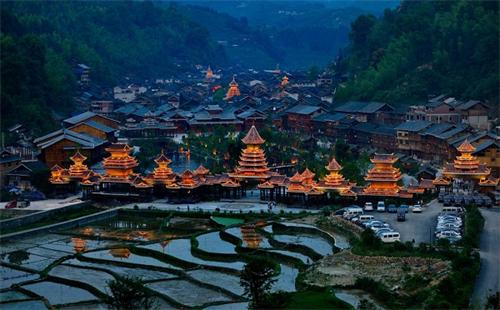
Nestled among mountains with a small river winding through, Zhaoxing Dong Village’s stilted wooden houses are scattered along the riverbanks, smoke curling from chimneys, with towering drum towers standing proudly. Known as the “First Dong Village,” it is the perfect window into Dong culture.
The village stretches along a narrow valley, with thousands of wooden houses tightly arranged, their rooftops gleaming under sunlight. The five drum towers—named “Ren, Yi, Li, Zhi, Xin” (Benevolence, Righteousness, Ritual, Wisdom, Faith)—stand like guardians of the village.
The Significance of Drum Towers
The drum tower is the soul of a Dong village. In ancient times, villagers would climb the tower to beat drums during fires, attacks, or important events, sending messages across the valley. Today, they remain central to community meetings, celebrations, and leisure. The tallest “Zhi Village Drum Tower” has 11 stories, rises 25 meters high, and is intricately carved with historical stories and auspicious motifs.
In the evening, when the towers are lit, villagers gather to sing, drink, or socialize—the drum tower becomes the heart of the village.
Dong Folk Songs and Long Table Banquets
The Dong folk song, known as the “voice of heaven,” is a UNESCO intangible cultural heritage and one of Zhaoxing’s most moving symbols. Without instruments, villagers naturally create harmonious multi-part singing. Elders play the lusheng (reed pipe instrument), children sit by the drum tower, and voices echo through the valley, calming the soul.
If you’re lucky enough to witness a performance, join a nighttime Dong song and long-table banquet. Sour soup fish, glutinous rice, pickled fish, and Miao rice wine fill the table, with guests and villagers singing and drinking together in joyous celebration.
Tang’an Dong Village and Tang’an Terraces: A Pastoral Painting
A two-kilometer walk from Zhaoxing leads to Tang’an Dong Village, where the most beautiful scenery is the Tang’an Terraces.
Built during the Ming dynasty, the terraces stretch from the valley floor to the mountain peaks, layer upon layer, like an oil painting. In spring, they fill with water, reflecting blue skies and clouds; summer brings lush green seedlings; autumn displays golden waves of rice; winter covers everything in snow.
Walking along the stone paths, you might see Dong farmers plowing with water buffalo or women planting rice in baskets—a living painting of agricultural life. Drum towers and flower bridges dot the village, highlighting the peaceful beauty of Dong rural life.
Jiabang Terraces: A Hidden Rice Wonderland
If Tang’an Terraces resemble a delicate painting, Jiabang Terraces are a grand scroll. Located in Jiache Village, Congjiang County, they are known as “China’s Most Beautiful Secret Terraces.”

The terraces feature six observation platforms:
- Platform 1: Closest view of the field lines.
- Platform 3: Widest panoramic view.
- Platforms 4–5: One-kilometer scenic walking paths.
- Platform 6: Highest point, ideal for sunrise and stargazing.
In spring, Jiabang’s water-filled fields reflect the sky; summer turns them a sea of green; autumn ripples gold with the rice harvest; winter cloaks them in snow, like silver chains on the mountains.
Transportation: From Congjiang High-Speed Railway Station, take a 3-hour bus (30 RMB) or 1.5-hour private car (≈180 RMB). Tickets cost 80 RMB; sightseeing buses allow easy hop-on, hop-off.
Tip: Weather in Guizhou is unpredictable; set aside an extra day in case of rain or fog. Rain may obscure views, but it creates a mystical, cloud-wrapped “fairyland” version of the terraces.
Xijiang Qianhu Miao Village: The Miao Village in Lights
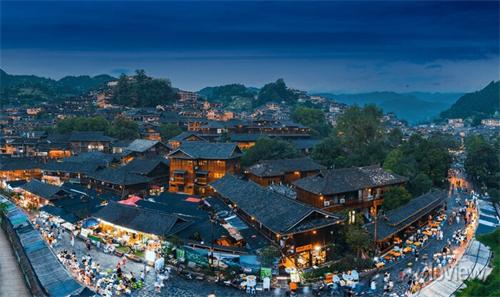
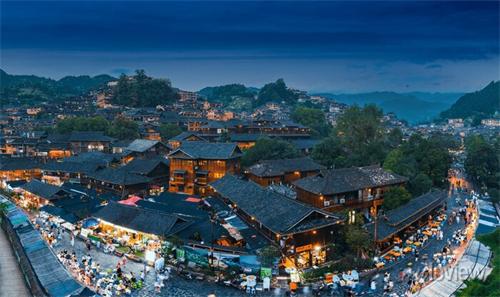
Located in Leishan County, Xijiang Qianhu Miao Village is the world’s largest Miao settlement. Thousands of stilted wooden houses climb the mountainsides like a wooden Great Wall.
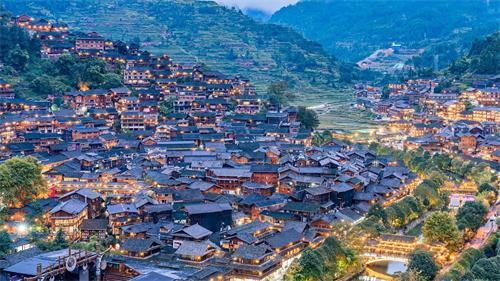
By day, the village is a cultural scroll: streets lined with silver jewelry, embroidery, and batik; museums displaying traditional clothing and farming tools narrating Miao history.
By night, Xijiang becomes truly breathtaking. From a viewing platform, as dusk falls, thousands of stilted houses light up—one, ten, a hundred… From the foot to the peak, lights sparkle like a river of stars. Miao songs drift in the distance, footsteps echo on stone paths—dreamlike and surreal.
Basha Miao Village: Guns and the Tree of Life
Eight kilometers from Congjiang lies Basha Miao Village, home to an ancient Miao subgroup that preserves practices dating back to the Warring States period.
Guns are a symbol here, used for hunting and festive celebrations. Visitors can try shooting; if you miss, you can try again without extra charge.
The Basha people worship trees, believing “we are born as a tree, we die as a tree.” Children plant a tree at birth, and elders are buried with a tree, continuing life in the forest. This philosophy of coexistence with nature is deeply moving.
Tickets: 40 RMB; performances 40 RMB; sightseeing bus 20 RMB; combo ticket 100 RMB.
Zhenyuan Ancient Town: A Watercolor Jiangnan Village
The final stop is Zhenyuan Ancient Town, with over 2,000 years of history. The Wuyang River flows through it, stone streets wind along the banks, and Ming and Qing buildings reflect in the water, like a painting.
The “Qinglong Cave Ancient Building Complex,” built on the mountainside, integrates Confucian, Buddhist, and Daoist culture. During the day, explore historical sites; in the evening, enjoy sour soup fish at a riverside restaurant while the sunset turns the water red—a poetic experience.
Qiandongnan Cuisine: Sour, Spicy, and Fresh
The local cuisine blends Miao and Dong flavors, emphasizing sour, spicy, and fresh tastes:
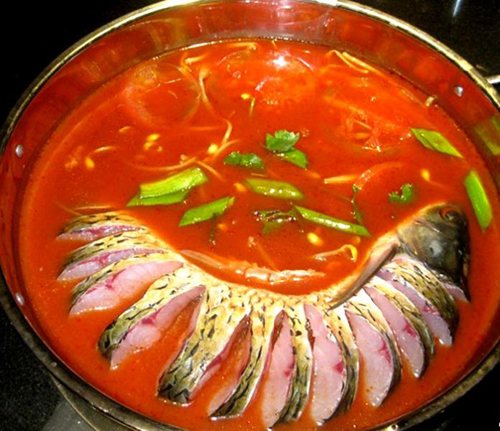
- Sour Soup Fish: Cooked in red or white sour soup, flavorful and refreshing.
- Glutinous Rice: Wrapped in tung leaves, fragrant and easy to carry.
- Pickled Fish and Meat: Hung under eaves, tangy and flavorful.
Paired with rice wine or bitter liquor, you can fully immerse yourself in the taste of Qiandongnan.
Transportation and Practical Information
- High-Speed Rail: Congjiang Station is closest to Zhaoxing; minibuses connect directly.
- Flights: Fly to Guiyang or Guilin, then transfer to high-speed rail.
- Self-Drive: Navigation is possible, but parking is usually outside villages.
- Ticket References: Zhaoxing Dong Village 80 RMB, Jiabang Terraces 80 RMB, Basha Miao Village 100 RMB combo, Qinglong Cave 60 RMB.
Best Time to Travel
- Spring: Terraces filled with water reflect the sky—best for photography.
- Summer: Vibrant greenery.
- Autumn: Golden rice waves, harvest season.
- Winter: Snow and mist create a poetic atmosphere.
For festival experiences, visit during Lunar New Year or the Dong Song Festival.
A Journey into Tradition and Nature
Qiandongnan is not a destination for fleeting sightseeing—it is a place to slow down. Its beauty lies not in a single attraction, but in the songs beneath drum towers, lights on stilted houses, and rice waves drifting in terraces and mist.
Walking on Xijiang’s stone streets, sitting on a Tang’an terrace stone bench, or planting a tree with the Basha people, you realize that this land’s value is more than scenery—it is the harmonious coexistence of people, nature, and tradition.
Traveling in Qiandongnan is a journey back to the heart.
Recommended for you: