


The Sepik River, Papua New Guinea: Primal Tribes and Crocodile Rituals
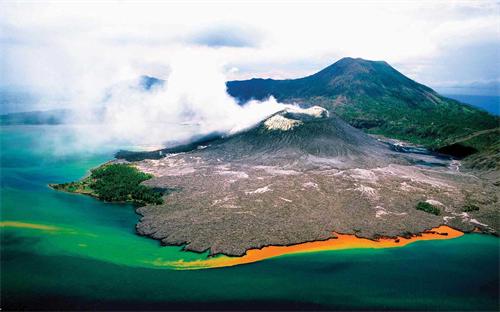
If the Amazon is the soul of South America, then on the South Pacific island of New Guinea, the Sepik River is undoubtedly the spiritual lifeline of Papua New Guinea. Stretching some 1,127 kilometers, it winds down from the Victor Emmanuel Range in the central highlands, through rainforests, swamps, and plains, before emptying into the sea. Unlike many great rivers of the world, the Sepik has no delta, nor any man-made levees or dams—it remains in its most pristine, untouched form.
Across this vast basin live mysterious, ancient tribes who have preserved traditions dating back thousands of years. They created unique art and rituals, most famously linked to their reverence for crocodiles. Because of this, the Sepik is not only a river of nature but also a “living fossil” of human culture.
Sepik: The Threshold to a Primal World
Reaching the Sepik is no easy task. Most travelers must first fly into Port Moresby, the capital of Papua New Guinea, then take a 1.5-hour domestic flight to Wewak, the provincial capital of East Sepik. Wewak serves as the gateway, but it is still quite far from the river’s heartland.
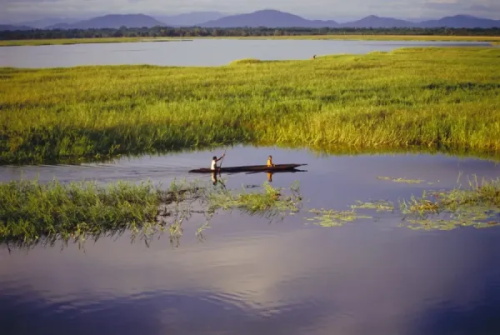
From Wewak, a bumpy 5–6-hour drive on dirt roads leads to Pagwi—the main jetty on the Sepik. From there, one must transfer to a motorized dugout canoe, traveling up or downstream for another 2–3 hours before gradually reaching the villages and lagoons.
This journey feels like a slow withdrawal from the modern world. Cell signal fades, electricity and internet become luxuries, replaced by the sound of rushing water, the chorus of insects, and the bright laughter of village children.
The Blackwater Lakes: A Home for Spirits and Art
In the middle Sepik region, the Chambri Lakes—often called the Blackwater Lakes—leave the deepest impression. These interconnected lagoons expand during the rainy season, forming vast black waters that look especially mystical at dawn and dusk.
The nearby Chambri village is renowned for its carving and artistry. Nearly every household creates wooden sculptures, pottery, and masks. Unlike souvenirs found in city shops, these items are authentic ritual objects: crocodile carvings, totem poles, spirit masks—each one infused with belief and history. For travelers seeking genuine Sepik art, Chambri is far more authentic than Wewak.
Facilities here are very limited, with no hotels. Visitors usually stay in villagers’ homes or camp in tents. At night, as the wind stirs the lake and distant drums echo through the air, you truly feel immersed in another cultural world.
Primal Tribes: Children of the Crocodile
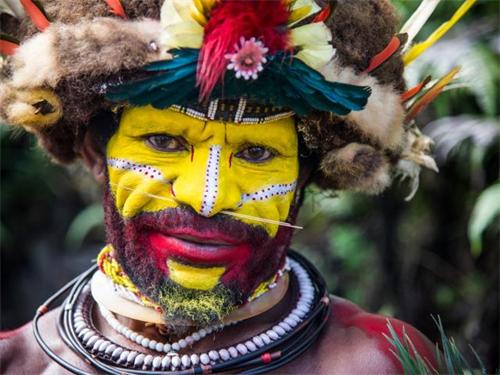
The Sepik is lined with countless small tribes, the most famous being the Iatmul—often referred to as the “Crocodile People.”
In their worldview, crocodiles are not merely fearsome creatures but ancestors’ incarnations, symbols of power and life itself.
In these villages, crocodile imagery is everywhere: the gables of the Haus Tambaran (spirit house) are carved with crocodile eyes and teeth; support beams are shaped like crocodile bodies; elders’ chests and shoulders are covered with scar-like patterns resembling scales.
Welcoming ceremonies are equally striking. Villagers, adorned with feathers, shells, and crocodile teeth ornaments, paint their faces with vivid clay pigments, and dance to the rhythms of drums. In those moments, it feels as if you’ve slipped through time, witnessing the raw essence of human civilization.
The Crocodile Ritual: Pain and Rebirth
For the Iatmul, a boy’s transition into manhood requires undergoing a harsh crocodile initiation.
Young men are taken into the spirit house, where elders cut hundreds of incisions into their chests, shoulders, and backs with bamboo blades. They must then remain inside for 21 days, enduring pain and solitude with only minimal food.
When the wounds heal, the scars form patterns resembling crocodile scales. Spiritually, this means the youth has been swallowed and reborn by the crocodile—now a true man.
Looking at these “crocodile warriors,” with their scale-like scars and unyielding eyes, you sense both the pain they endured and the pride they carry.
Perhaps it is this resilience that has allowed these tribes to survive for millennia in such a harsh environment. For half the year, resources are scarce, and people must subsist on leaves and small fish. Yet they have mastered patience and the art of coexisting with nature.
The Crocodile Festival: A Tribal Celebration
If scarification is a sacred rite of passage, then the Sepik Crocodile Festival is a cultural showcase for the outside world.
Held every August in Ambunti and lasting three days, the festival gathers surrounding villages and tribes in a vibrant display of costumes, feathers, dances, and storytelling. All center on the sacred bond between humans and crocodiles.
The festival features not only ceremonial performances but also demonstrations of environmental protection and cultural preservation. Visitors can witness traditional fishing, crocodile catching, and canoe building, or join in markets and dances. Sitting on the riverbank, watching dancers with crocodile totems whirl to the beat of drums, you can’t help but be struck by the primal vitality.
For travelers, it is the most direct and rare chance to experience Sepik culture.
The Flavors of the Sepik: A River’s Kitchen
Food is an essential lens into culture. Along the Sepik, the most common meal is grilled fish with sago cakes.
Sago, extracted from the sago palm, is the local staple. Villagers make it into pancakes or dumplings, wrapped in leaves and roasted. Paired with freshly caught river fish, it is simple yet nourishing.
During festivals or gatherings, the highlight is Mumu—a stone oven. Heated stones are buried in a pit, layered with meat, taro, vegetables, and bananas, then covered with banana leaves to slow-cook for hours until the aroma bursts forth.
Cooking in bamboo tubes is also common: fish, meat, and sago flour are packed into bamboo, mixed with a bit of coconut milk, and roasted over a fire. These meals carry the smoky flavors of the river and showcase the Sepik people’s harmony with nature.
Travel Tips: Practical Information
1. Best Time to Visit
The dry season (July–October) is ideal. The river is calmer, travel is easier, and visitors can catch the August Crocodile Festival.
2. Transportation
- Port Moresby → flight to Wewak.
- Wewak → Pagwi jetty (5–6 hours by dirt road).
- Pagwi → villages and lakes (2–3 hours by motor canoe).
3. Accommodation
Mostly village homestays or simple river lodges. Bring a mosquito net, repellents, and malaria medication.
4. Language and Guides
Locals primarily speak Tok Pisin (Pidgin). Hiring a guide or using a tour operator is highly recommended.
5. Health and Safety
The region is mosquito-dense. Wear long sleeves, bring repellents, and drink bottled water rather than river water.
Memories of the Sepik
Sitting in a dugout canoe, drifting down the Sepik, I watched spirit houses standing tall in the distance as the sunset gilded the lake. Drums pulsed from the villages, children splashed in the river, and crocodiles floated silently.
In that moment, I realized: the Sepik is not merely a river. It is a tunnel through time, carrying us back to the origins of human civilization. It reminds us of ancient wisdom about strength, endurance, and living in harmony with nature.
Recommended for you: